Public Concern Over Corruption Dominates Midterm Elections
In a politically polarized American landscape, one issue resonates across party lines: the pervasive concern about government corruption. Recent polling from Gallup reveals that a staggering 89% of Americans believe corruption is widespread, with agreement spanning Republicans, Democrats, and independents alike. This figure marks a notable rise from 73% recorded in 2024, underscoring a growing discontent with political integrity.
Globally, the United States ranks among the countries with the highest levels of concern regarding corruption, trailing only Lebanon, Peru, Ghana, and Nigeria. Amidst rising costs of living, a Fox News Poll indicates that 88% of voters prioritize government corruption over inflation and gas prices, emphasizing its significance in the upcoming elections. Similarly, a CNBC survey identified corruption as the foremost issue facing the nation, surpassing economic concerns.
Common Sense Shop
The United States of Common Sense
Amazon shopping links. Sponsor Complete!
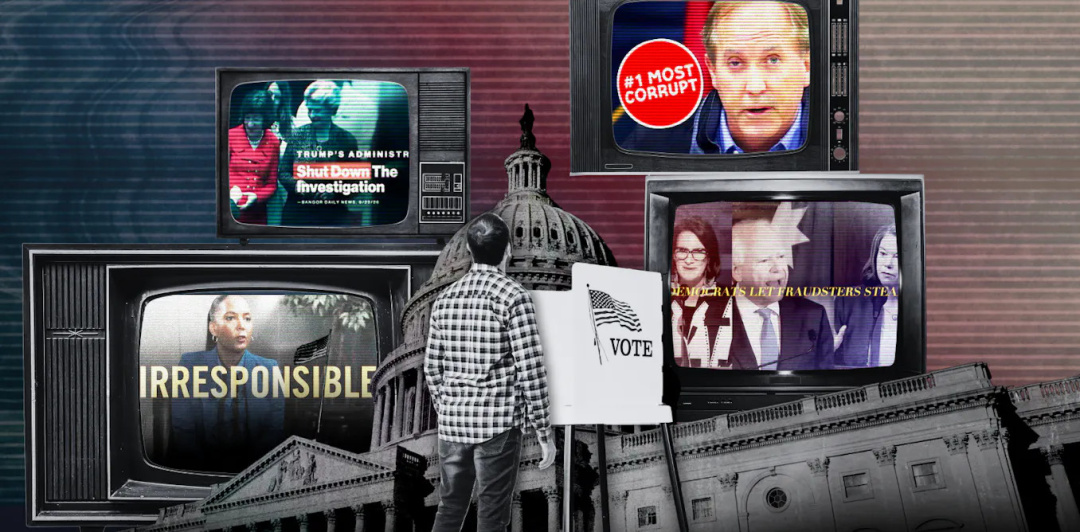
Political advertising reflects this sentiment, with over $275 million of the projected $11.6 billion in campaign spending dedicated to corruption-themed ads. Both parties are investing heavily in this narrative, with Democrats allocating approximately $173 million and Republicans about $93 million. While Democrats often highlight alleged corruption linked to the Trump administration, the blame is not exclusive to one party. A survey by the Brennan Center for Justice revealed that Americans view various institutions and figures, including Congress, the Supreme Court, and both major party leaders, as corrupt.
The perception of corruption is not merely a matter of individual misconduct; two-thirds of respondents attribute it to systemic issues within US government institutions. This perspective has historical roots, as trust in politicians and government has been declining since the 1970s, hitting record lows in recent years. For instance, while 86% of Americans trusted their fellow citizens in 1976, that number has dwindled to just over half today.
Trust in Local Government Persists
Interestingly, this skepticism toward federal institutions does not extend to local governments. Polls indicate that two-thirds of Americans still trust their local government, a sentiment that has remained stable over decades. This local trust contrasts sharply with the negative perceptions of national leaders, suggesting that while there is widespread discontent with Washington, Americans still believe in the effectiveness of local governance.
Candidates in this election cycle are keenly aware of the public's discontent. Many are distancing themselves from traditional party affiliations, opting instead to emphasize their local roots and criticize the Washington establishment. This strategy is not new; historically, politicians have sought to align themselves with the electorate's frustrations, particularly during times of economic uncertainty.
The Common Sense Test
However, this year's midterm elections present a unique challenge as candidates attempt to intertwine concerns about corruption with economic anxieties. Notably, Democratic Senate candidate James Talarico in Texas has stated, "we have an affordability crisis because we have a corruption crisis," highlighting the connection between these issues. Similarly, Senator Jon Ossoff from Georgia has framed corruption as a barrier to progress for ordinary people.
Despite the Democrats' current advantage in being perceived as the party to combat corruption, they face the expectation to deliver tangible results if they regain control of Congress. The political landscape is shifting, and the upcoming elections may serve as a pivotal moment for addressing the deep-seated concerns about corruption in American governance.