Midterm Elections: Key Races That Could Signal a Blue Wave

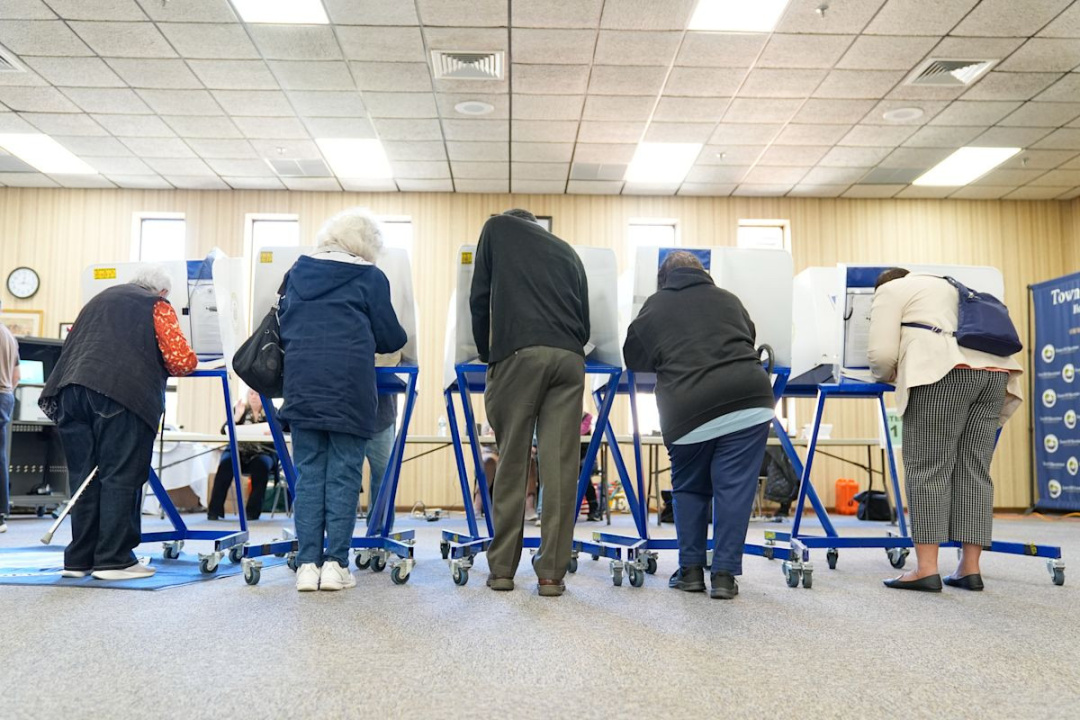
Americans are preparing to cast their votes in a historic midterm election that will determine control of Congress for the remainder of President Trump's term. Polls indicate that Democrats are positioned to make notable gains, with leads of 7 to 11 points on the generic ballot. Republicans are bracing for potential losses but are determined to maintain their hold on the Senate.
The central question of the evening is whether a substantial blue wave will emerge for Democrats and how many U.S. House seats they can flip. Additionally, the potential for Democrats to secure a Senate majority and gain control of several governorships is under scrutiny.
Common Sense Shop
The United States of Common Sense
Amazon shopping links. Sponsor Complete!
As the polls begin to close, the first results will come in from parts of Kentucky and Indiana at 3 p.m. PST, followed by other Eastern states. Analysts are watching for various outcomes, including a scenario where Democrats could gain a House majority—either significantly or modestly—while Republicans retain control of the Senate.
A split Congress would enable House Democrats to initiate investigations into the Trump administration and obstruct Republican legislative priorities. Meanwhile, Senate Republicans would retain the power to block legislation from the House and continue approving appointments, including those to the Supreme Court. This dynamic could lead to legislative gridlock and even government shutdowns.
Should a larger blue wave materialize, Democrats could sweep numerous House seats and key Senate races, potentially giving them a narrow majority in both chambers. This would empower them to halt Senate confirmations of Cabinet and judicial appointments, although Trump would still wield veto power, making it unlikely for Democrats to achieve veto-proof majorities on partisan initiatives.
The potential for civil unrest looms over the election, especially if one party contests the results in certain races, as suggested by Trump and his allies. This could lead to prolonged uncertainty or even a constitutional crisis.
The House majority may become evident before the night concludes, but the Senate majority could take longer to determine, particularly in Alaska, which has one of the latest poll closures at 9 p.m. PST. If Democrats succeed in taking the House, the full extent of their victory might not be clear immediately due to slower ballot counting in key states like California and Pennsylvania.
Competitive Races to Watch Closely
More than four dozen House races are considered competitive, with 18 classified as tossups by the Cook Political Report. The remaining races are competitive but leaning toward one party. The outcomes in these races will provide insight into the magnitude of any wave election.
Seven Senate seats are currently viewed as tossups: Alaska, Iowa, Kansas, Maine, Michigan, Ohio, and Texas. Additionally, South Carolina, Minnesota, and New Hampshire are seen as potentially competitive, while North Carolina and Georgia, once viewed as competitive, are now considered safer for Democrats.
Experts are particularly focused on several races that could serve as early indicators of the election's direction. For instance, Kentucky's 6th district has emerged as an unexpected tossup, and its early poll-closing time could make it a bellwether. Political analysts suggest that a Democratic victory in this district would signal a significant shift in voter sentiment.
Similarly, Iowa's 2nd district has been shifted to a tossup amid challenging conditions for state Republicans, and a loss here could further indicate a blue wave. New York's 17th district is another critical race to watch, as it is one of the few districts with a Republican incumbent that went blue in the 2024 presidential election.
The Common Sense Test
In Texas, the 15th district is being closely monitored for its implications among Latino voters, who previously leaned right but may be shifting back to the left. The Michigan Senate race is crucial; a loss for Democrats here would complicate their path to Senate control, requiring them to flip five out of six swing seats in other states.
Overall, if Democrats manage to win in traditionally purple or red districts across states like Florida, Virginia, and Pennsylvania, it could signal a favorable night for them. As the results unfold, the implications for governance and the balance of power in Washington will become clearer.