Trump Announces Halt to $4 Billion Military Aid to Israel
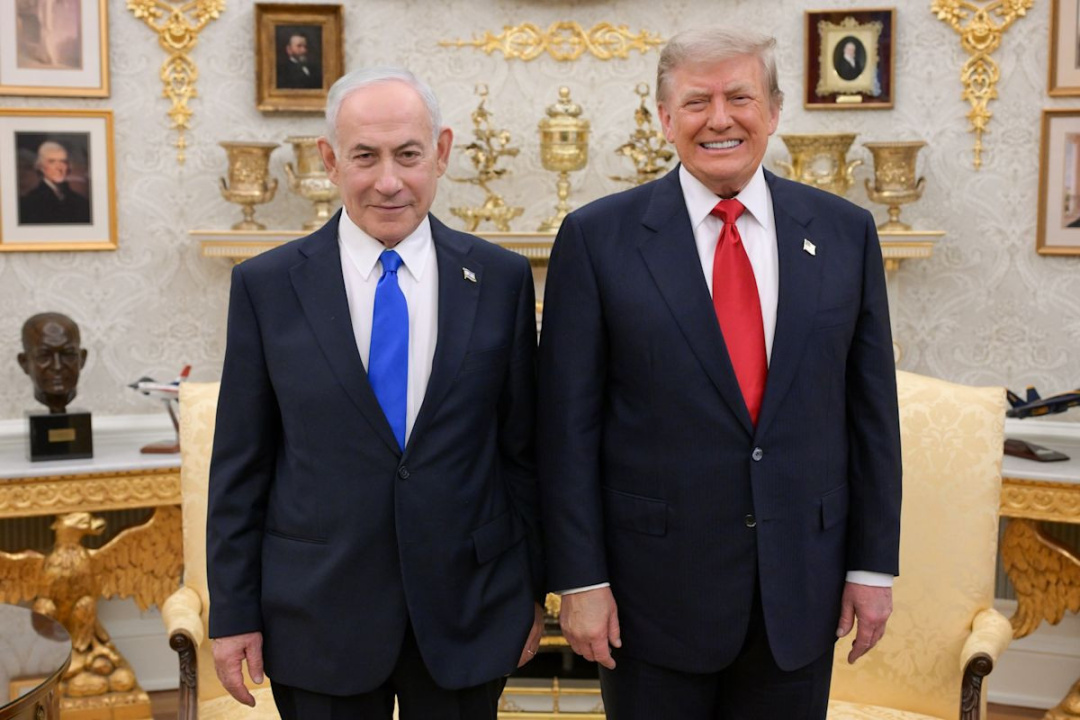
In a surprising announcement on Election Day, President Donald Trump stated that the United States will end nearly $4 billion in annual military aid to Israel. This declaration, made during an interview on "Fox and Friends," indicates a potential shift in the long-standing U.S.-Israel relationship, which has been heavily reliant on American military assistance for decades.
Trump revealed that he and Israeli Prime Minister Benjamin Netanyahu had come to an agreement months prior to halt the aid by the end of the year. "They're fine with it because they've become a very successful country," Trump asserted. He emphasized that Israel no longer requires this financial support, adding, "We won't be paying anymore...we won't be paying Israel. We'll help Israel if they need it. They've been a great ally."
Common Sense Shop
The United States of Common Sense
Amazon shopping links. Sponsor Complete!
This decision could significantly impact the U.S.-Israel alliance, which has been fortified by a 10-year agreement signed during the Obama administration, committing $38 billion in military aid from 2019 to 2028. The abrupt timeline of this announcement raises concerns about how the Trump administration plans to implement this change and whether Congressional approval will be necessary.
Over 90 percent of the military aid provided to Israel is directed to American defense contractors, meaning that the funds largely remain within the U.S. economy. The Pentagon has deferred inquiries regarding this announcement to the White House, which has yet to respond to requests for clarification. The Israeli embassy also could not be reached for comment on this significant policy shift.
Trump's comments suggest that the annual aid has become a contentious point for Democrats, who often cite the $4 billion payment as a symbol of perceived unfairness in U.S. foreign policy. He noted, "The left uses the $4 billion payment as a signal of unfairness. And we can't allow that to happen. I don't like that."
Former Congresswoman Marjorie Taylor Greene, who previously advocated for cutting military assistance to Israel, hinted that the timing of the announcement may be politically motivated, coinciding with the midterm elections. She remarked on social media, "Amazing how being on the verge of Republicans getting wiped out in the midterms changes hearts and minds."
Israel's Political Turmoil and U.S. Aid Debate
This announcement follows a week after Israel's parliamentary elections, which left Netanyahu grappling to maintain power. His Likud party secured the most seats, but fell short of the majority needed to form a stable government, complicating the political landscape in Israel.
The U.S. relationship with Israel has faced increasing scrutiny in recent years, particularly amid rising public discontent regarding Israel's actions in the Gaza conflict. Some Democrats have begun to advocate for conditioning or even ending military aid to Israel, while a faction of Republicans is also looking to reduce U.S. military interventions abroad, viewing Israel as a potential hindrance to that goal.
Israel is classified as a major non-NATO ally, which prioritizes it for arms sales and transfers of surplus U.S. military equipment. The majority of the military funding typically includes $3.3 billion in foreign military financing and an additional $500 million for cooperative missile defense initiatives. Notably, this funding constitutes less than one percent of the annual U.S. federal budget.
The Common Sense Test
Netanyahu has long indicated a desire for Israel to become less dependent on U.S. military financing, stating earlier this year that he aimed to reduce U.S. support to zero. Trump claimed that Netanyahu was the first to suggest the idea of ending the aid, highlighting the Israeli leader's acknowledgment of the contentious nature of this funding.
As both nations navigate this evolving relationship, the implications of this announcement will undoubtedly reverberate through political and military channels, raising critical questions about future U.S. support for Israel and the broader geopolitical landscape in the Middle East.