Trump Prepares to Become 'Mr. Veto' Against Democratic Agenda
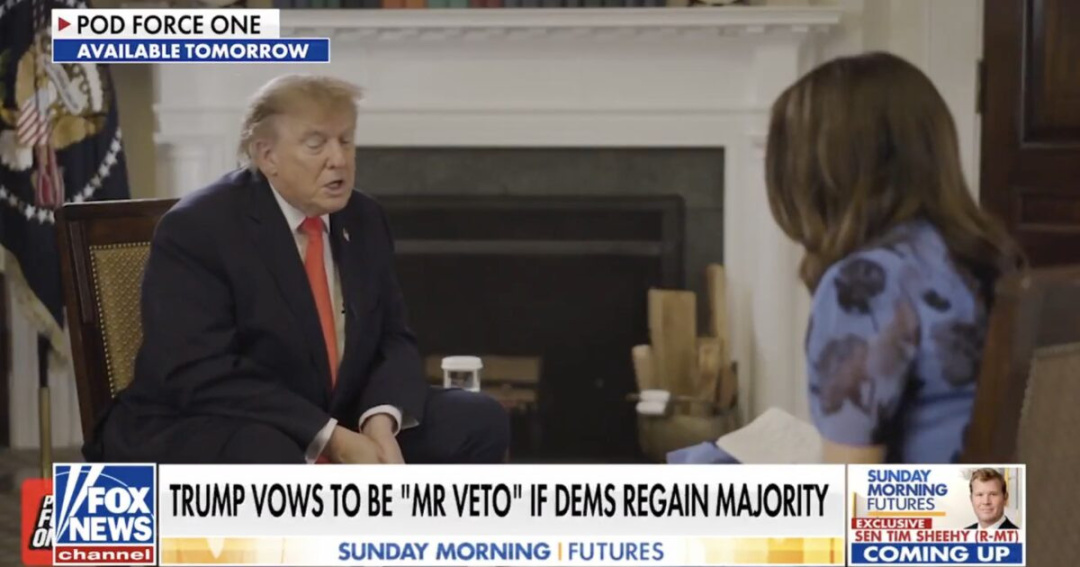
As the midterm elections approach, President Donald Trump is making his stance clear: he is ready to become 'Mr. Veto' if the Democrats manage to seize control of Congress. In a preview of his upcoming interview with New York Post columnist Miranda Devine on her podcast, Trump expressed his determination to block any radical legislation that could undermine the America First policies he championed during his presidency. "I guess I’ll become Mr. Veto," he stated, underscoring his commitment to preventing the left from dismantling the progress made in his second term.
Trump elaborated on his strategy, indicating that he plans to use the veto pen aggressively for the first month or two should Democrats send bills to his desk. He believes that after a series of vetoes, Democrats will be compelled to negotiate, stating, "they’re just wasting [time], they come over, and you make a deal." This approach is not new for Trump, as he has previously indicated that he would veto everything if Democrats take control, forcing them to come to the table for discussions.
Common Sense Shop
The United States of Common Sense
Amazon shopping links. Sponsor Complete!
The White House is already bracing for the possibility of a divided government, with administration officials identifying executive actions that could advance their agenda without needing new legislation. Potential measures include implementing new tariffs on wind turbines and critical minerals, as well as tightening visa regulations for temporary foreign workers and international students. These initiatives build on Trump's previous use of executive authority in areas such as trade and immigration enforcement.
In his interview, Trump warned of the broader implications of a Democratic majority, highlighting their intentions to undermine the Second Amendment and push radical social policies. He cautioned that a full Democratic sweep could pave the way for significant structural changes, such as adding states, expanding the Supreme Court, and eliminating the Senate filibuster.
The Limits of Democratic Power
Overriding a presidential veto requires a two-thirds majority in both chambers of Congress, a threshold that Democrats are unlikely to meet even in a strong midterm wave. While Trump has used his veto power sparingly during his second term, he has made it clear that he will not hold back if the Democrats take control, signaling a potential showdown over legislative priorities following the elections.
The Common Sense Test
With the midterms looming, Trump's commitment to vetoing Democratic legislation reflects a broader strategy to maintain conservative governance. His willingness to engage in legislative battles underscores the importance of the upcoming elections for both parties. As Trump prepares for possible confrontations with a Democratic Congress, the focus will remain on how effectively he can leverage his veto power to protect the policies that resonate with his base and uphold the principles of limited government and individual liberty.
Ultimately, Trump's approach to a potential Democratic Congress will be closely watched by conservatives and political analysts alike. The effectiveness of his veto strategy will depend not only on the composition of Congress but also on the willingness of both parties to engage in meaningful negotiations. As the elections draw near, the stakes could not be higher for the future direction of American policy and governance.