Supreme Court Considers Religious Liberty in Preschool Funding Case
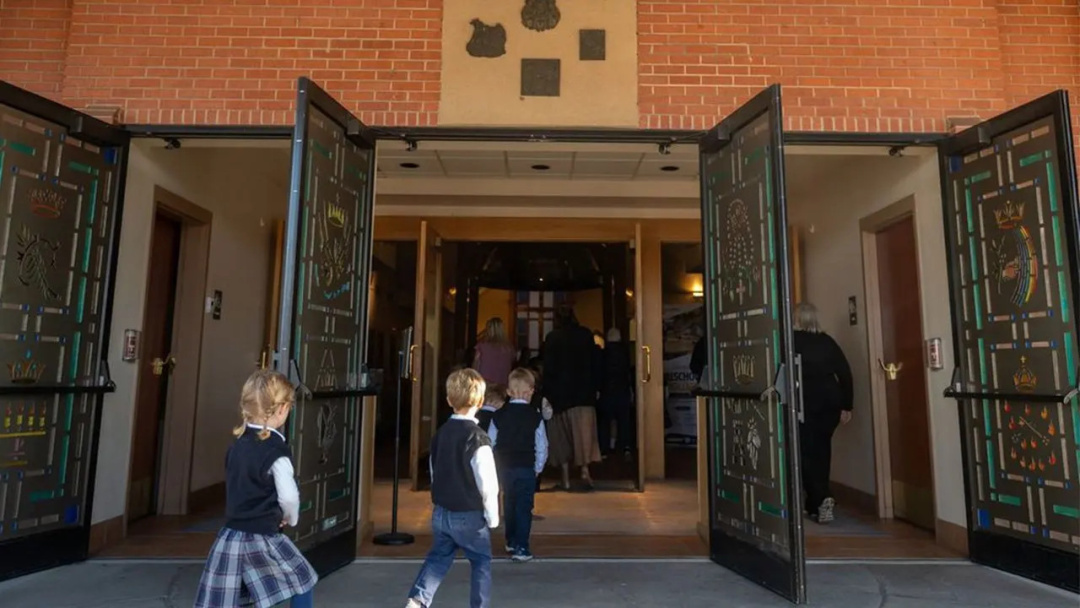
The U.S. Supreme Court recently heard arguments regarding Colorado's preschool funding program, which has raised significant questions about religious discrimination and the rights of Catholic preschools. The conservative majority on the court expressed strong support for the Catholic institutions, which contend that the state's taxpayer-funded program unconstitutionally excludes them based on their religious beliefs.
The core issue at stake is whether private educational institutions that refuse admission to children of LGBTQ+ parents can be denied access to public benefits under state anti-discrimination laws. This case represents the latest in a series of high-profile religious rights appeals reaching the Supreme Court, many of which have originated from Colorado.
Common Sense Shop
The United States of Common Sense
Amazon shopping links. Sponsor Complete!
During the two-hour oral arguments, justices explored the conflicting interests between religious liberty and the state's responsibility to ensure equal opportunities for all families, including those with LGBTQ+ parents. Justice Sonia Sotomayor questioned the likelihood of LGBTQ+ families choosing Catholic schools, suggesting that the exclusion should be the choice of the families rather than a state-imposed condition. In contrast, Justice Brett Kavanaugh highlighted the potential for a compromise that respects both religious rights and the needs of LGBTQ+ families, suggesting that a solution could be found without creating unnecessary conflict.
Colorado's Universal Preschool Program (UPK), established by a 2020 ballot measure, allocates public funds to participating schools provided they meet certain conditions, including the requirement to offer equal enrollment opportunities regardless of race, ethnicity, religious affiliation, sexual orientation, gender identity, or disability. Two Catholic parishes have challenged this policy, asserting that it targets their deeply held beliefs regarding same-sex marriage and family structure.
The archdiocese in Colorado operates 34 preschools, which adhere to a policy of admitting only those students whose families support Catholic teachings. The plaintiffs are seeking exemptions from Colorado's law, arguing that their exclusion constitutes religious discrimination in violation of the First Amendment. The Trump administration has voiced its support for the religious plaintiffs in this case.
Colorado's Defense of Neutral Funding Policies
In defense of its policies, Colorado maintains that its public benefit conditions are neutral and apply uniformly to all preschools, regardless of their religious affiliation. The state attorney emphasized that religious schools are welcome to participate as long as they comply with the same nondiscrimination laws that govern all publicly funded preschools. Currently, the state provides a benefit of $6,300 per child for up to 15 hours of preschool each week, funded through a tobacco tax.
The Supreme Court's review of this case will also consider the possibility of narrowing a long-standing precedent that generally denies religious practices exemptions from broadly applicable laws. Historically, the court has focused on the separation of church and state in religious rights disputes, but the current conservative majority has shown a trend toward favoring religious institutions in cases involving "free exercise" claims.
The Common Sense Test
As the justices deliberate, the ideological divide is evident, with conservative justices emphasizing the need to protect the free exercise rights of the Catholic parishes against what they view as discriminatory state requirements. Meanwhile, some justices, like Elena Kagan, referenced previous rulings affirming that religious institutions cannot be treated differently under the law.
The case, St. Mary Catholic Parish v. Roy (25-581), is poised to set a significant precedent regarding the intersection of public funding and religious freedom. A ruling is expected by next spring, which could have far-reaching implications for how religious schools engage with state-funded programs and the broader landscape of religious liberty in America.