Byron Donalds' Leadership: Amendment 3 and School Voucher Policies in Florida
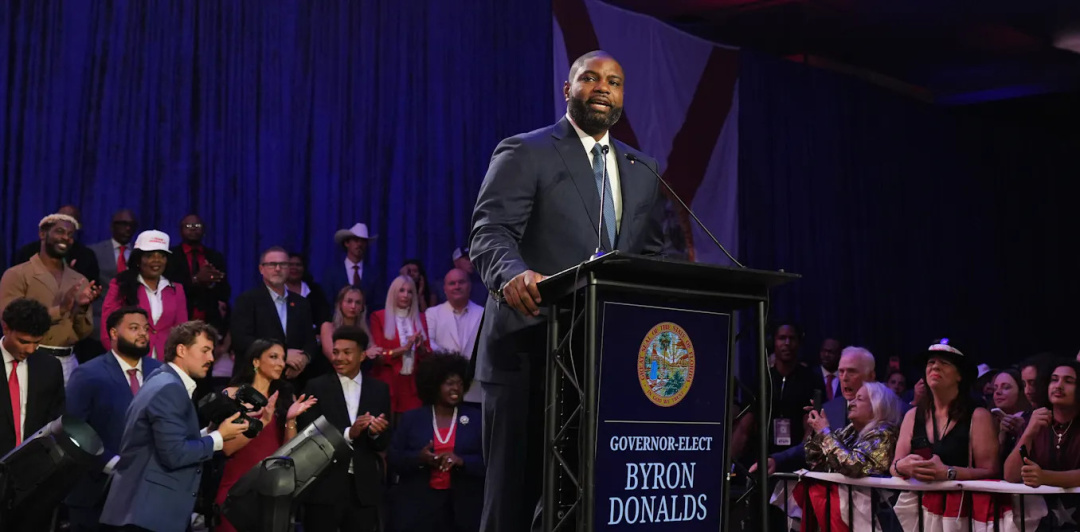
In a surprising turn of events amidst what many pundits are calling a blue tsunami nationwide, Florida has once again reaffirmed its red state identity by electing Republican Byron Donalds as its first Black governor. His victory, albeit narrower than expected, saw him win by a mere 1.3 points over Democrat David Jolly, translating to approximately 107,000 votes. Donalds campaigned on a promise to uphold the legacy of his predecessor, Governor Ron DeSantis, who has been a polarizing figure in American politics.
One of the first major changes Donalds will face is the implementation of Amendment 3, which was passed by Floridians on November 3. This amendment signifies a departure from the state’s long-standing commitment to home rule, which traditionally allowed local governments to set policies on local issues. Instead, Amendment 3 restricts local government spending to core areas such as public safety, schools, and natural resources. This shift could potentially hinder some rural local governments from maintaining essential services due to a reduced tax base, necessitating state intervention.
Common Sense Shop
The United States of Common Sense
Amazon shopping links. Sponsor Complete!
DeSantis has already called for a special session to address the implications of Amendment 3 before Donalds officially takes office. The former governor has indicated plans to further limit local governments' ability to raise revenue through additional taxes, a move that aligns with Donalds’ support for the amendment. This legislative shift provides Donalds and the state Legislature with an opportunity to redistribute tax funding across Florida, but it also complicates the political landscape as the GOP has lost its supermajority in the Florida House of Representatives.
The new governor's approach to local governance will be closely watched, especially as he has expressed support for DeSantis’ aggressive measures to limit home rule, including restricting local control over land development. However, Donalds has also indicated a more flexible stance regarding data centers, suggesting that local communities should have a say in their establishment.
Public Health and Education Policy Challenges
Another critical area of focus for Donalds will be public health policy, particularly regarding vaccine mandates. The position of Florida surgeon general, which Donalds will appoint, holds significant power over public health emergencies and vaccine mandates. The current surgeon general, Dr. Joseph Ladapo, has been a vocal opponent of vaccine mandates and has proposed changes to reduce the number of vaccines required for school attendance. Donalds, who has publicly opposed vaccine mandates and did not receive a COVID-19 vaccine, supports Ladapo's proposed rule changes. However, the Florida Legislature has mandated certain vaccines for K-12 students, meaning any significant changes to these requirements will require legislative action.
In the realm of education, Donalds inherits a controversial universal voucher program initiated by DeSantis in 2023, which allows parents to access state funds for private or homeschooling options. This program, which has faced scrutiny for its financial implications—costing an estimated $4.5 billion in fiscal year 2026—has created tensions within the state budget and led to declining enrollment in public schools. Donalds is a strong advocate for this program and aims to position Florida as a model for school choice, emphasizing parental control over educational decisions.
The Common Sense Test
As Donalds prepares to take office, he has already signaled intentions to work with the Legislature to reform how K-12 schools are funded, potentially allowing for more flexibility in spending. He has proposed a universal scorecard for the voucher program to enhance transparency and enable parents to compare educational outcomes across different schools. His wife, Erika Donalds, a former school board member and advocate for school choice, is likely to play a significant role in shaping education policy during his administration.
In his victory speech, Donalds distanced himself from President Trump, whose policies have faced backlash even in conservative strongholds like Florida. Nevertheless, he acknowledged a congratulatory call from Trump, reinforcing his commitment to maintaining Florida's conservative values. As Donalds embarks on his governorship, the effectiveness of his policies will be closely scrutinized, particularly in light of the changing dynamics within the Florida Legislature and the challenges of implementing his ambitious agenda.