Democratic Gains in Key States Could Transform Presidential Elections
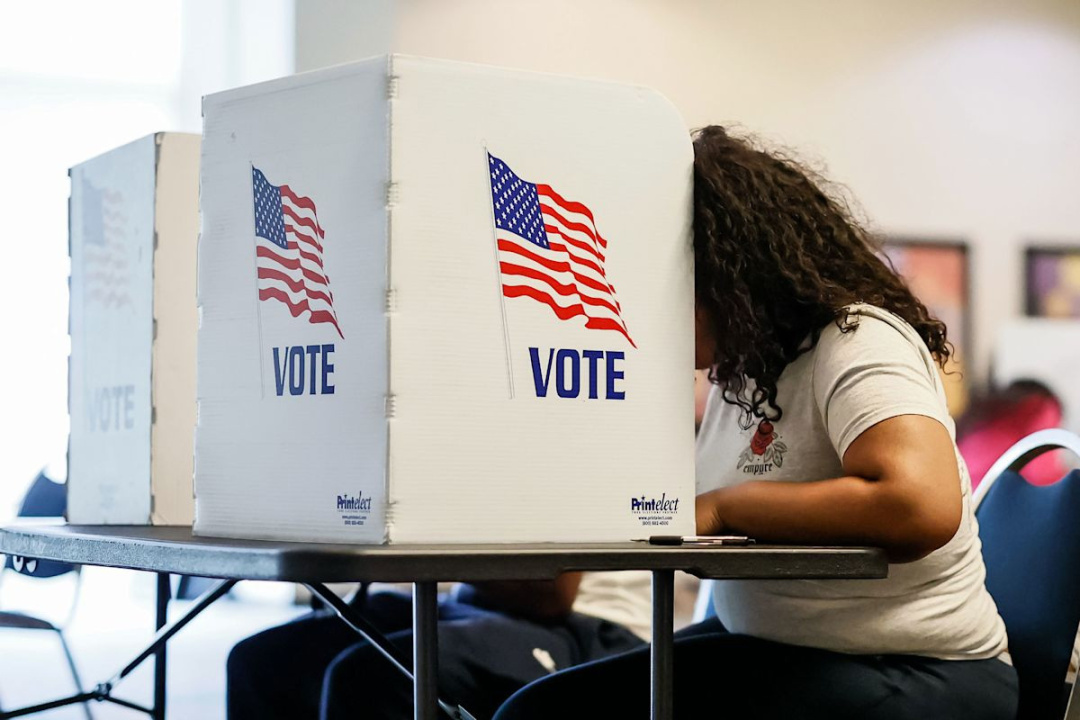
The recent midterm elections have ushered in a wave of Democratic victories across several battleground states, raising questions about the future of the Electoral College and how America elects its presidents. With Democrats now holding complete control of the governorship and both legislative chambers in states like Pennsylvania, Michigan, Wisconsin, Nevada, and Arizona, there is a real possibility that the traditional Electoral College system could be fundamentally altered.
This is not mere speculation; a plan is already in motion. Over the past two decades, 18 states and Washington, D.C., have formally agreed to join the National Popular Vote Interstate Compact (NPVIC), which would award all their electoral votes to the presidential candidate who wins the national popular vote, regardless of the outcome in their own state. Currently, these jurisdictions account for 222 electoral votes, falling short of the 270 needed to activate the compact. However, if states like Pennsylvania (19 electoral votes), Michigan (15), Arizona (11), Wisconsin (10), and Nevada (6) join, the total would reach 283, assuming the compact survives potential constitutional challenges.
Common Sense Shop
The United States of Common Sense
Amazon shopping links. Sponsor Complete!
As the dust settles from the elections, attention is shifting towards the implications of this Democratic shift in statehouses. Carrie Rheingans, a Democratic representative from Michigan, remarked, "The time is right. This blue tsunami is really going to help push this forward across the whole nation." Similarly, Wisconsin lawmaker Kelda Roys stated that national popular vote will be prioritized early in the legislative session.
The Electoral College, established by the Founding Fathers, is a system of indirect democracy where the winner of the presidential election is determined not by the total number of votes received nationwide, but by the number of electoral votes garnered from individual states. In most cases, the candidate who wins the majority of votes in a state receives all of that state's electoral votes. This winner-take-all approach has led candidates to focus their campaigns on swing states, often neglecting those that consistently lean Democratic or Republican.
Historically, the Electoral College has produced outcomes where candidates won the presidency without securing the popular vote, a situation that has fueled calls for reform. The NPVIC was introduced in 2006 by John Koza, aiming to ensure that the candidate who wins the national popular vote would also win the presidency, eliminating the need for a constitutional amendment.
Momentum for the National Popular Vote Compact
Since its inception, the compact has gained traction, with Maryland being the first state to sign on in 2007, followed by several others, particularly after the contentious elections of 2000 and 2016, where the popular vote did not align with the electoral outcome. While some Republican-led states have also adopted the NPVIC, it generally requires Democratic control of the state legislature to pass.
With the recent Democratic trifectas in key states, lawmakers are already discussing the introduction of legislation to join the compact in the upcoming session. However, the path forward is fraught with uncertainty. Michigan, for instance, failed to enact the compact during its previous Democratic trifecta, and Nevada's governor vetoed it in 2019, citing concerns over diminishing his state's influence in presidential elections.
The Common Sense Test
The potential for legal challenges looms large as well. Notre Dame law professor Derek Muller has raised concerns about the constitutionality of the NPVIC without congressional approval, suggesting that while the compact may gain momentum, it could face significant hurdles in the courts.
As Democrats push for the NPVIC, the question remains whether they will prioritize this reform amid pressing issues like rising living costs. Clinton Anderson, a Democratic assemblyman in Wisconsin, noted, "I want to make it a priority, but it's not the thing I heard on the doors I knocked." The fate of the NPVIC may ultimately hinge on how lawmakers balance their legislative agendas and the potential backlash from constituents who may prioritize other concerns over electoral reform.