Javier Milei's Free Speech Dilemma: Champion or Censor?
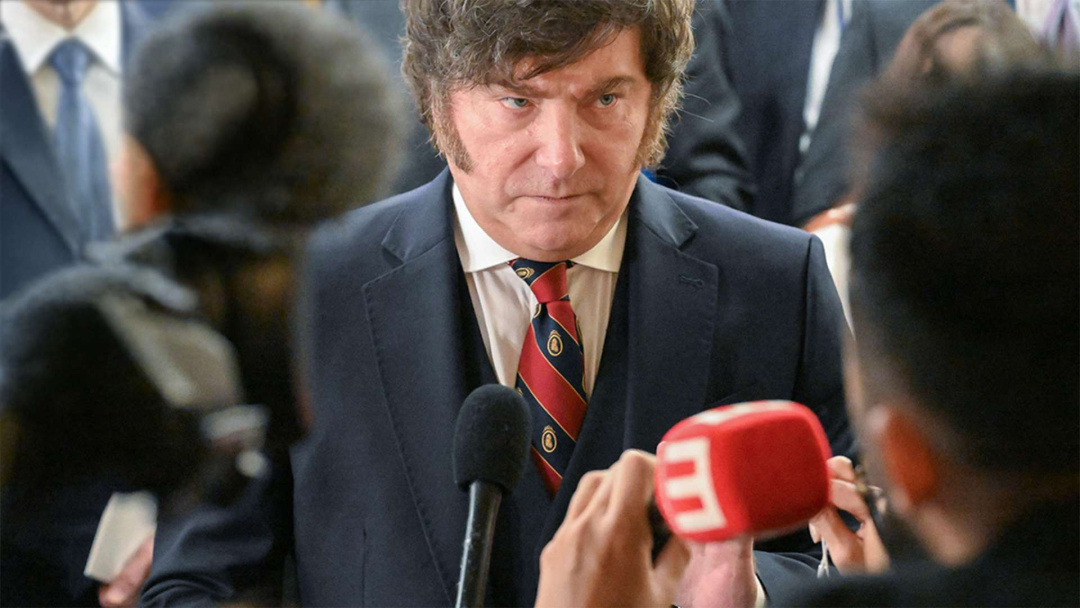
Javier Milei, the Argentine President, has made headlines for his commitment to limited government and free speech. However, his recent actions raise questions about the sincerity of this commitment. Following Argentina's World Cup games, Milei accused the U.S. Democratic Party and the governments of Brazil and Mexico of financing an "anti-Argentina" campaign. In response, he signed an emergency decree allowing the government to deport or ban foreigners who incite violence or direct hate messages against Argentina. This decree, while claiming to protect national symbols, lacks clarity on what constitutes legitimate criticism versus hate speech.
Milei's actions reflect a troubling trend where state power is wielded against dissenting voices. Despite a powerful speech at the U.N. in 2024 advocating for freedom of speech, he has filed multiple criminal complaints against journalists and commentators who criticize him. Notably, he targeted prominent figures like Carlos Pagni, accusing him of damaging his reputation through statements that allegedly compared Milei to Adolf Hitler. This interpretation appears exaggerated and indicative of a leader who struggles to separate valid critique from personal affronts.
Common Sense Shop
The United States of Common Sense
Amazon shopping links. Sponsor Complete!
The complaints against journalists have not gone unchallenged. Courts have dismissed several of Milei's defamation cases, reinforcing the protections afforded to freedom of expression under Argentina's constitution. However, the mere act of filing these complaints can serve to intimidate critics, creating a chilling effect on free speech. In a notable incident, Milei labeled journalists as "scumbags with microphones" and sought to use the legal system to silence those who disagree with him, further complicating his image as a free speech advocate.
In April 2026, a military security agency took action against two journalists for allegedly disclosing state secrets, a case that was later dismissed by a prosecutor. This incident exemplifies the administration's aggressive stance towards the media, where even the perception of dissent is met with punitive measures. Milei's government has also implemented a decree that restricts freedom of information requests, raising alarms among civil society groups about potential abuses of power.
Balancing Free Expression and Censorship
Despite these challenges, some of Milei's policies have indeed expanded free expression. His administration repealed outdated laws that restricted media access and allowed satellite internet providers to operate in Argentina, thus enhancing connectivity for many citizens. These moves, while positive, do not negate the troubling implications of his administration's attempts to suppress dissent.
Milei's approach to free speech mirrors historical patterns seen in other democracies, where leaders, even those professing to uphold individual freedoms, have resorted to punitive measures against critics. The Sedition Act of 1798 in the United States serves as a historical parallel, where criticism of government officials was met with legal repercussions. Such actions contradict the principles of accountability and transparency that are essential in a democratic society.
The Common Sense Test
As Milei continues to navigate the complexities of governance, the question remains: can he reconcile his rhetoric of freedom with the reality of his actions? The judiciary's role in protecting free speech will be crucial as Argentina grapples with these tensions. Ultimately, the effectiveness of Milei's presidency will depend on whether he can uphold the very liberties he claims to champion, without resorting to the heavy hand of state power against those who challenge him.
In assessing Milei's legacy, it is vital to consider the balance between national security and the preservation of individual liberties. While some of his policies have expanded access to information, the ongoing legal battles against journalists highlight a fundamental contradiction in his governance. A true champion of free speech must not only promote deregulation but also protect the rights of those who dare to speak against the government. As Argentina looks to the future, the preservation of free expression will be a litmus test for Milei's commitment to the principles he professes to uphold.