Justice Thomas Challenges Democrat States on Gun Bans After Ruling
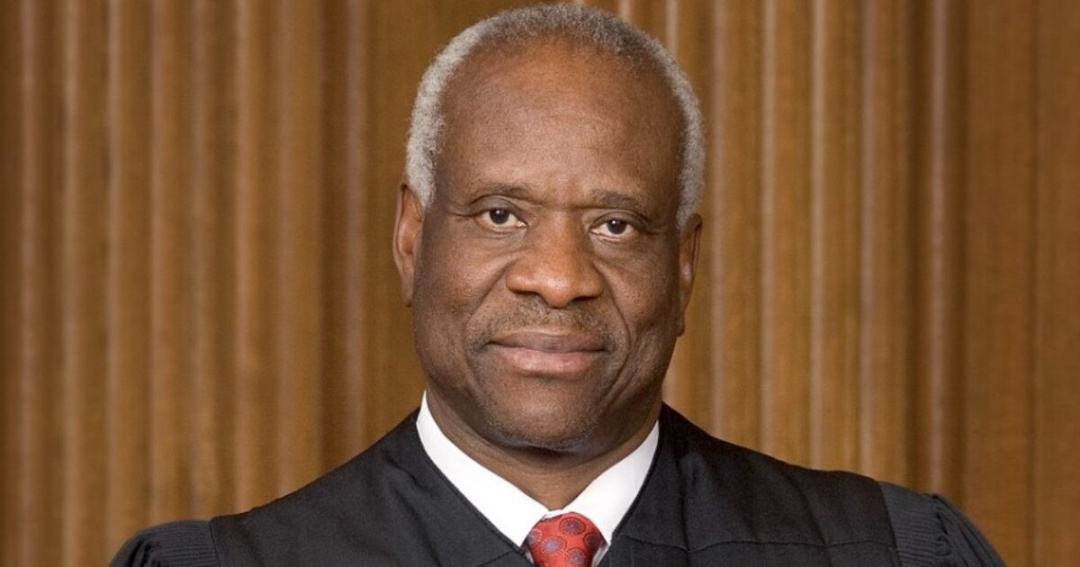
Supreme Court Justice Clarence Thomas has issued a stern warning regarding the sweeping restrictions on the constitutional rights of law-abiding gun owners in Democrat-controlled states. His remarks follow the U.S. Supreme Court's decision not to hear the case of Novotny v. Moore, which challenged Maryland's extensive limitations on where Americans can legally carry firearms. While the court's decision effectively leaves Maryland's restrictions intact for now, Thomas's statement signals that the constitutional battle over gun rights is far from settled.
In a detailed four-page statement accompanying the court's decision, Justice Thomas questioned the legitimacy of the increasingly expansive gun-free zones that have been enacted by left-leaning state legislatures. He expressed serious doubts about whether these sweeping restrictions are supported by the historical tradition of firearm regulation in the United States. Maryland's regulations, which were largely upheld by the Fourth Circuit Court of Appeals earlier this year, include prohibitions on carrying firearms in numerous public spaces.
Common Sense Shop
The United States of Common Sense
Amazon shopping links. Sponsor Complete!
Among the restrictions highlighted by Thomas are those in several Democrat-controlled states, which have dramatically increased the number of designated "sensitive places" where firearms are prohibited. For instance, New Jersey has at least 25 categories of restricted locations, including public libraries and state-owned beaches. New York restricts firearms in 20 types of locations, including houses of worship, while California has 29 categories, barring firearms in places like banks and athletic facilities. Thomas also noted similar restrictions in Illinois and Hawaii.
The cumulative effect of these regulations, Thomas argues, is to effectively prohibit the carrying of firearms in locations where people gather for eating, recreation, and free speech, which he views as a direct affront to the rights of law-abiding citizens. He cautioned that expanding the definition of "sensitive places" to encompass virtually every public gathering would undermine the general right to carry arms for self-defense.
Thomas Calls for Reassessment of Gun Rights
Although the Supreme Court's decision not to hear the Maryland case is not a ruling on the merits, it leaves the Fourth Circuit's decision in place. Thomas, who previously authored the landmark New York State Rifle & Pistol Association v. Bruen decision affirming the right to carry firearms outside the home, is advocating for the court to revisit the issue in a more narrowly defined case. He believes that the current approach taken by lower courts and blue-state legislatures is stretching the definition of "sensitive places" far beyond its historical context.
The Common Sense Test
As the Supreme Court prepares to hear oral arguments on December 2 regarding separate cases that challenge bans on commonly owned semiautomatic firearms, including AR-15 rifles, the implications of Thomas's statements may resonate deeply within the ongoing national debate over gun rights. The Trump administration has already filed a brief supporting these Second Amendment challenges, arguing that governments cannot categorically prohibit firearms commonly possessed by law-abiding Americans for lawful purposes.
The ongoing legal battles surrounding Second Amendment rights underscore the critical need for clarity and consistency in the interpretation of gun laws across the nation. Justice Thomas's call for a reevaluation of the expansive restrictions imposed by Democrat-controlled states highlights a growing concern among conservatives that these measures are not only unconstitutional but also detrimental to public safety and individual freedoms. As the Supreme Court prepares to hear further challenges, the outcome could have significant implications for the future of gun rights in America.