India Faces Increased Online Censorship Following Cockroach Protests
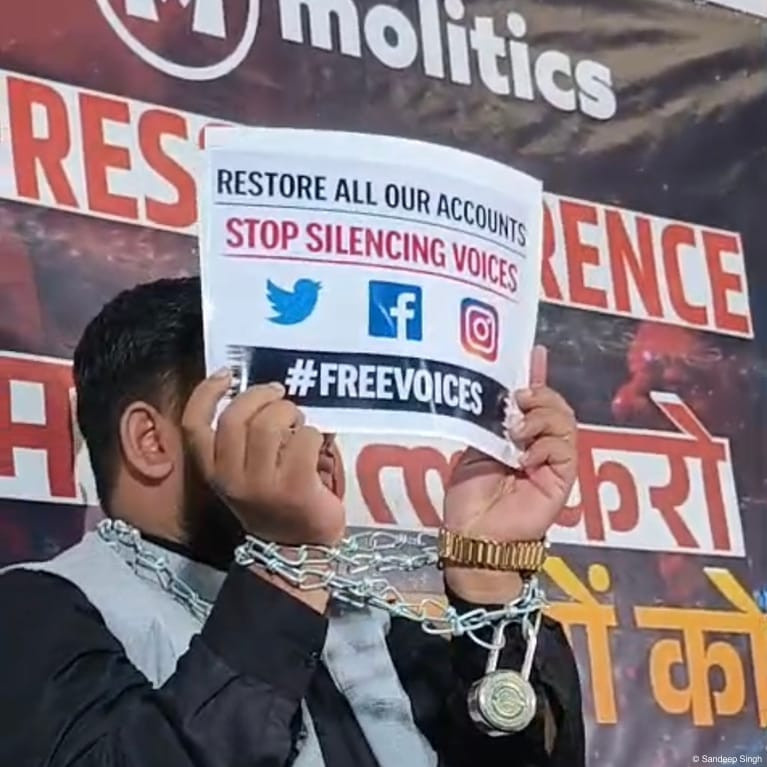
The recent Cockroach Janata Party (CJP) protests in India have sparked significant concern regarding online censorship, as content creators and journalists report increasing restrictions on their work. A poignant video of a young girl crying about alleged police brutality during the protests was among the many pieces of content that faced swift removal from social media platforms. Content creator CitySavitri, who began posting videos just two months ago, experienced firsthand the chilling effect of censorship when her critical video about the Rashtriya Swayamsevak Sangh's (RSS) influence on the Bharatiya Janata Party's (BJP) rise was restricted within an hour of posting.
Independent journalist Sadhika Tiwari, who documented the protests in New Delhi, also faced challenges when her footage of police using excessive force was restricted after going viral. Tiwari's video reached around 10 million views before being taken down, illustrating the precarious position of journalists in the current climate of censorship. Political cartoonist Satish Acharya has similarly encountered repeated restrictions, with his Instagram account being blocked multiple times, highlighting a broader trend of silencing dissenting voices.
Common Sense Shop
The United States of Common Sense
Amazon shopping links. Sponsor Complete!
The digital news outlet Maktoob Media experienced its own censorship during a critical moment in the India-Pakistan conflict, with its X account being withheld in India without prior notice. Founder Aslah Kayyalakkath expressed frustration over the lack of communication from both the government and the platform regarding the restrictions. He emphasized that suppressing independent journalism undermines the fundamental principles of transparency and accountability in a democracy.
Many content creators report receiving no prior notification about their content being blocked, leaving them uncertain whether the restrictions were government-mandated or the result of social media platforms acting preemptively. Meta, the parent company of Facebook and Instagram, stated that it employs automated tools to detect content that may violate community standards, but critics argue that this system lacks transparency and human oversight.
The heart of the issue lies within India's amended IT Rules, 2021, which now require social media platforms to remove or disable access to unlawful content within three hours of receiving a valid court order or government notice. This amendment has raised alarms among digital rights advocates, who argue that it has led to an unprecedented level of censorship. Pranesh Prakash, a technology law adviser, noted that the rules allow police to notify intermediaries about content they deem unlawful without the need for formal complaints, exacerbating the issue of censorship.
Concerns Over Automated Content Moderation
The Software Freedom Law Center, India (SFLC.in), has criticized the growing reliance on automated content takedowns, calling into question the processes used to identify and restrict content. They highlighted a troubling incident where a takedown request was registered using a fake email address, raising serious concerns about the verification processes in place.
Despite the government's denial of censorship, stating that actions are only taken against "objectionable content," many influencers and journalists continue to report restrictions on their accounts. Rights organizations, including Human Rights Watch, warn that these expanding content restrictions could stifle free expression and lead to self-censorship among journalists and ordinary users.
The Common Sense Test
Acharya, however, remains undeterred in his commitment to political cartooning, asserting that the Indian Constitution guarantees his right to critique the government. Tiwari echoes this sentiment, emphasizing the importance of preserving a historical record of events like the CJP protests, especially in light of official denials of police misconduct. She argues that the removal of such content serves to erase critical moments from public memory, allowing the government to deny accountability in the future.
As the debate over censorship in India continues, it raises significant questions about the future of free speech and the role of social media in facilitating or hindering public discourse. The balance between maintaining public order and protecting individual rights is increasingly under scrutiny, and the implications for democracy are profound. The ongoing situation demands vigilance and accountability from both the government and social media platforms to ensure that the rights of citizens to express themselves are not unduly compromised.