Mongolia's President Resigns Amid Corruption Allegations
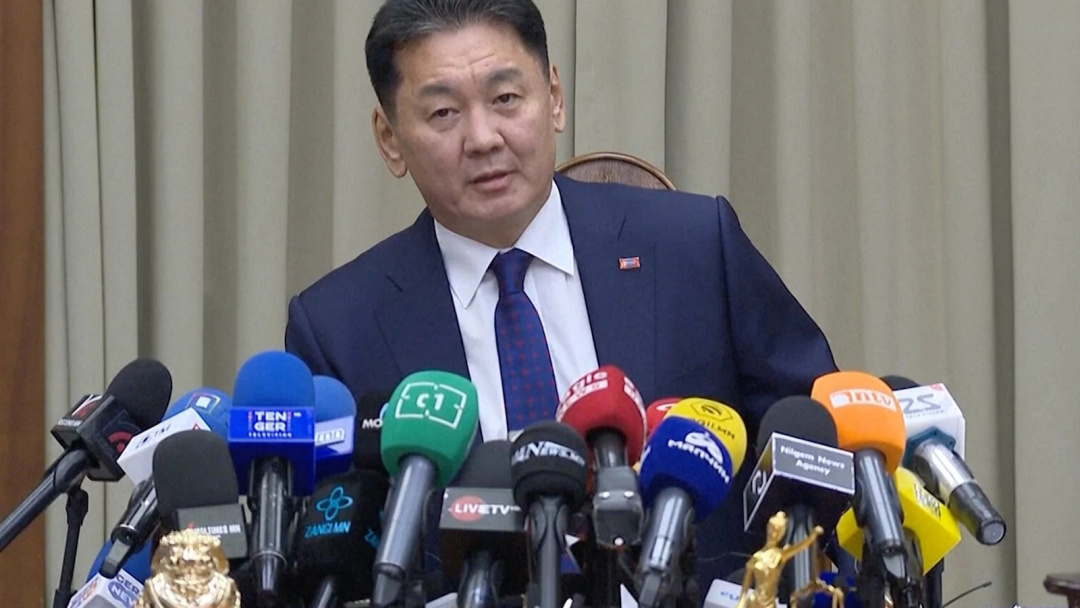
Mongolia’s parliament has accepted the resignation of President Khurelsukh Ukhnaa after he faced accusations of benefiting from a government railway project seven years ago, a time when he served as prime minister. This decision, made by 96 out of 104 members of the State Great Khural, underscores the ongoing political turmoil within the ruling Mongolian People’s Party.
The accusations were levied by Nyambaatar Khishgee, a former mayor of Ulaanbaatar, who belongs to a different faction of the party and currently resides in self-imposed exile in Canada. His claims have intensified the factional strife within the party, suggesting that Khurelsukh's resignation is not merely a response to corruption allegations but also a strategic maneuver in the ongoing power struggle.
Common Sense Shop
The United States of Common Sense
Amazon shopping links. Sponsor Complete!
In a dramatic session, Khurelsukh's resignation took immediate effect, with the parliament speaker set to assume the role of interim president until a new election is held within four months, as mandated by Mongolian law. Khurelsukh, who was present during the vote, publicly warned Nyambaatar, stating, "That individual who has flown away like a ‘bird’ must be brought back and made to answer before the law. I hear he is seeking asylum abroad." He also accused Nyambaatar of taking bribes related to another development project, further complicating the political narrative.
Khurelsukh's Stance on Allegations
Despite the allegations, Khurelsukh announced his resignation on Tuesday, asserting his willingness to cooperate with any investigations while firmly denying any wrongdoing. "I have never stolen from my people or my state," he stated, indicating his intention to return to ordinary citizenship after his presidential duties.
The Common Sense Test
Political analysts note that Khurelsukh's resignation could serve as a double-edged sword. Marissa Smith, who monitored elections in Mongolia in 2024, suggested that an early election could benefit both the ruling party and Khurelsukh, whose term was originally set to conclude in June 2027. This scenario mirrors his previous political maneuvers, as noted by Julian Dierkes, a Mongolia expert at the University of Mannheim. Dierkes pointed out that Khurelsukh's earlier resignation as prime minister in January 2021, ostensibly in response to public protests, ultimately paved the way for his successful presidential campaign six months later.
The implications of this political upheaval are profound, raising questions about accountability and governance within Mongolia's political framework. As the nation prepares for a new election, the focus will likely remain on the integrity of its political institutions and the ongoing struggle for power within the ruling party.