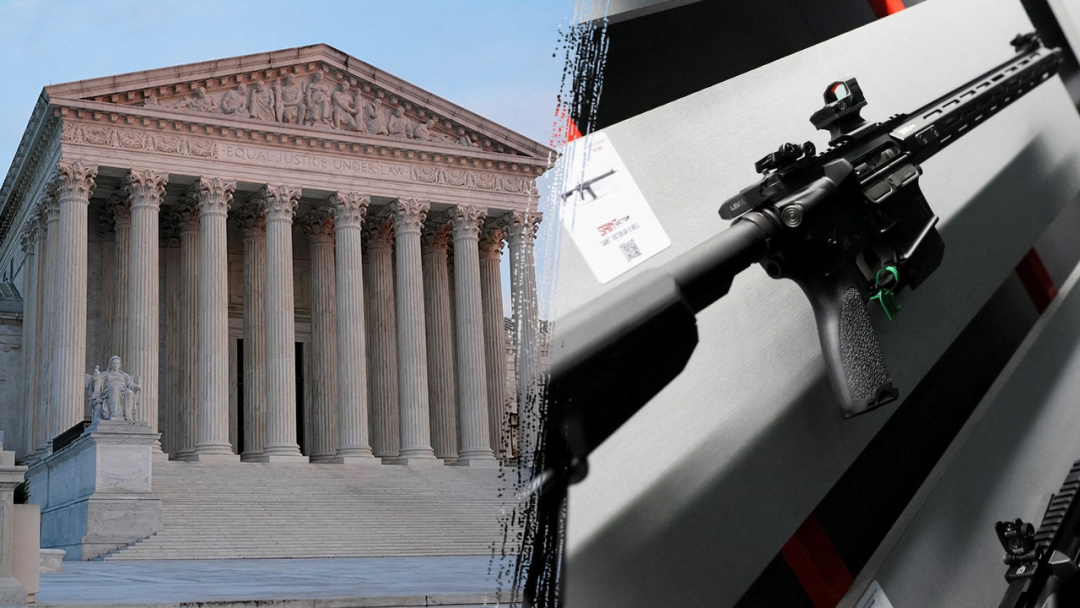
Supreme Court Faces Challenge to AR-15 Bans Based on Common Use Test

In the landmark 2008 case District of Columbia v. Heller, the Supreme Court established that the Second Amendment guarantees the right to own arms "in common use" for lawful purposes such as self-defense. This principle was further reinforced in the 2022 case New York State Rifle & Pistol Association v. Bruen, where the Court affirmed that the Second Amendment protects the right to carry handguns in public, noting their widespread use for self-defense.
This common-use test presents a significant challenge to the recent efforts by Connecticut and Cook County, Illinois, to uphold bans on so-called "assault weapons," including the popular AR-15 rifle. Both jurisdictions are urging the Supreme Court to overlook the choices made by millions of American gun owners in favor of these bans. However, the petitioners challenging these bans, including the Firearms Policy Coalition (FPC) and the Second Amendment Foundation (SAF), argue that such a stance would require the Court to disregard its own precedents established in Heller and Bruen.
Common Sense Shop
The United States of Common Sense
Amazon shopping links. Sponsor Complete!
The petitioners in the cases Khaya v. Cook County and Grant v. Higgins are asking the justices to overturn lower court decisions that deemed the AR-15 bans constitutional. They assert, "It is not possible for this Court to affirm without overruling the core holdings of Heller and Bruen." They emphasize that Heller established that weapons protected under the Second Amendment are those that are in common use, and Bruen applied this holding consistently.
Connecticut and Cook County contend that Heller and Bruen do not specifically address the types of weapons individuals may possess, suggesting that legislators should have the authority to ban firearms they deem "unusually dangerous." This argument, however, contradicts the historical context established by Heller, which recognized a tradition of prohibiting "dangerous and unusual weapons" while distinguishing them from arms commonly used for lawful purposes.
The petitioners argue that laws banning AR-15s and similar semiautomatic rifles are unconstitutional when applying the principles laid out in Heller. They point out that these rifles are widely considered to be in common use, with a unanimous Supreme Court previously labeling the AR-15 as "the most popular rifle in the country."
Burden of Proof on Gun Regulations
Furthermore, Bruen clarified the burden of proof for gun restrictions, placing the onus on the government to demonstrate that such regulations are consistent with the nation's historical tradition of firearm regulation. The petitioners assert that the arguments made by Connecticut and Cook County mirror outdated judicial reasoning that has been rejected by the Court in prior rulings. They argue that the bans are arbitrary and do not effectively target genuinely dangerous weapons, as they focus on cosmetic features rather than the actual functionality of the firearms.
The FPC highlights that Cook County's ordinance is particularly broad, allowing for the prohibition of semiautomatic rifles based on the presence of just one of several commonplace features. This includes items such as barrel shrouds, which have been standard components of rifles for generations. The organization contends that such regulations do not address the actual dangers posed by firearms but instead impose unnecessary restrictions on law-abiding citizens.
The Common Sense Test
As the Court prepares to hear oral arguments on December 2, the outcome of these cases could have significant implications for gun rights and the interpretation of the Second Amendment. The petitioners maintain that the Second Amendment protects the rights of Americans to possess arms that are in common use for lawful purposes, and they argue that the bans in question directly violate this fundamental principle.
In conclusion, the petitioners argue that the criminal misuse of firearms cannot justify the banning of arms that are commonly used by law-abiding citizens. They point out that handguns, which are often involved in violent crime, are still protected under the Second Amendment, and thus, the same logic should apply to AR-15s and similar rifles. The upcoming Supreme Court decision could reaffirm the rights of gun owners across the nation, reinforcing the notion that common sense must prevail in the interpretation of the Second Amendment and the rights it guarantees to American citizens.