Vox Party's Immigration Stance Could Shift Spain's Political Landscape

Spain's far-right Vox party is making waves in the lead-up to the national election, pledging to prioritize the needs of Spanish citizens over those of foreign residents and immigrants. This promise resonates strongly in Badalona, a working-class city near Barcelona with a significant immigrant population, where the party's campaign hymn, "National Priority," sets a combative tone. The song, sung passionately by a baritone, portrays a struggle for the country, positioning Vox and its leader, Santiago Abascal, as the cavalry ready to save the day.
Vox's commitment to expelling migrants and prioritizing Spanish citizens has found a receptive audience among voters like Pablo Guerrero, a father of six who appreciates the party's defense of Spain's Catholic roots. Young supporters, such as law student Carla Sabater, have begun to see Vox as a viable alternative, shedding preconceived notions about the party and recognizing its potential for real change.
Common Sense Shop
The United States of Common Sense
Amazon shopping links. Sponsor Complete!
Historically, the far-right has struggled to gain traction in Spain, largely due to the legacy of Francisco Franco's dictatorship. However, the rise of anti-immigration populism across Europe and the U.S. has opened a door for Vox, particularly as Spain has recently granted amnesty to one million undocumented migrants. This political climate presents Vox with a unique opportunity to shift the paradigm of Spanish politics, similar to the trajectories of parties like Marine Le Pen's National Rally in France.
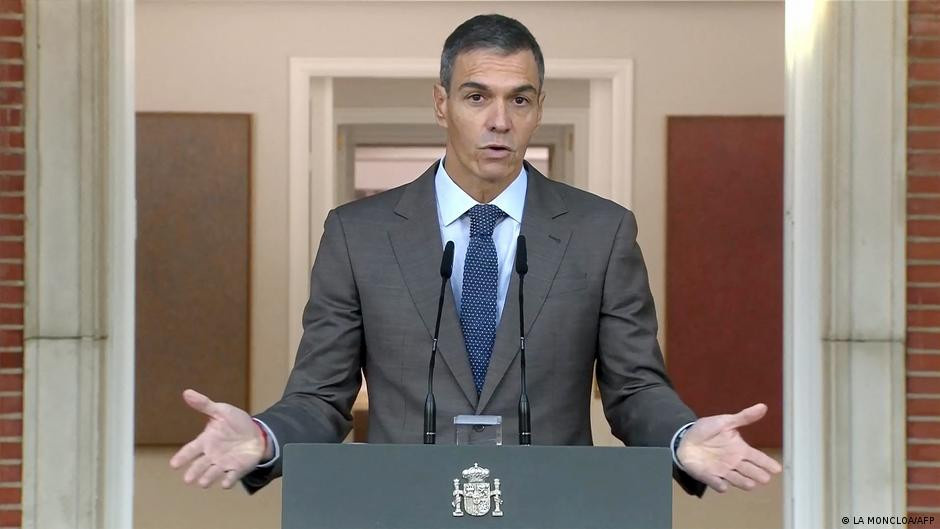
As Vox seeks to establish itself as a kingmaker, it aims to form a coalition with the traditional conservative Popular Party (PP). In exchange for supporting PP leader Alberto Núñez Feijóo for prime minister, Vox would push for stricter immigration policies. This potential alliance raises concerns among critics, including incumbent Prime Minister Pedro Sánchez, who warns that a coalition with Vox would signify a regression to a more repressive era in Spanish politics.
Youth Perspectives on Immigration Policy
Sánchez's warnings, however, may not resonate with younger voters who have little memory of Franco's regime. Political analyst Montserrat Nebrera notes that many voters believe Vox will operate within democratic norms, despite the party's controversial proposals. Abascal rejects the label of "far-right," framing Vox's positions as those of "common sense," yet political scientists argue that its policies are indeed more extreme than those of traditional right-wing parties.
The immigration debate has intensified in Spain, with Vox capitalizing on recent migrant surges at the borders. Abascal has labeled the influx of young Moroccans into Ceuta as an "invasion," using these narratives to galvanize support. While Sánchez's government has received backing from the business community and religious leaders for its amnesty program, Vox's criticisms resonate with voters who perceive increased migration as a threat to social stability.
The Common Sense Test
At a recent rally, Vox's ideologue Carlos Hernández Quero argued that the arrival of millions of migrants has negatively impacted job prospects for Spaniards, leading to increased welfare dependency and housing demand. He criticized the left for undermining public services, framing immigration as a key factor in these challenges. Meanwhile, Sánchez is attempting to shift the conversation towards housing affordability, hoping to downplay immigration concerns among voters.
As Spain's economy grows, the benefits have not been felt universally, prompting some voters to consider Vox as a serious alternative. Jenny Rodríguez, a shop clerk attending a Vox rally, expressed a desire to prioritize local citizens over immigrants, highlighting a sentiment that could shape the election outcome. With the political landscape shifting, the implications of Vox's rise could have lasting effects on Spain's governance and immigration policies.