Supreme Court's Ruling Sparks Concerns Over Election Integrity
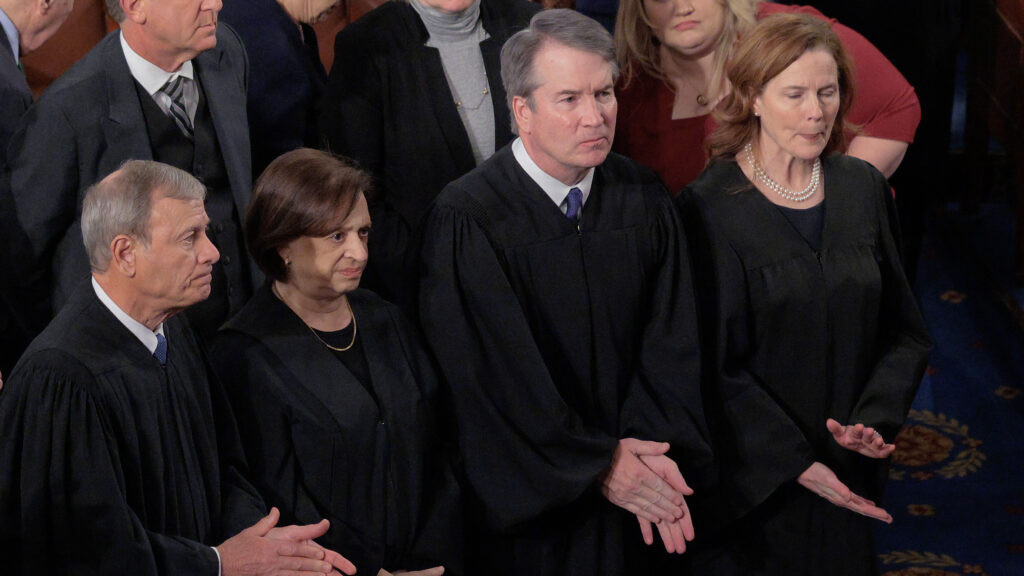
The U.S. Supreme Court's latest ruling has ignited significant concerns about election integrity, particularly regarding a presidential executive order designed to bolster voter ID requirements. Critics assert that the Court's attention was misdirected towards postal regulations rather than the overarching constitutional implications of the executive order. This misalignment raises questions about the Court's commitment to upholding constitutional principles in the face of political maneuvering.
In its decision, the Supreme Court failed to affirm the president's executive order, which aimed to ensure election integrity by implementing stricter voter ID and eligibility standards. Instead, the Court's reasoning was steeped in intricate references to postal rules, which many view as irrelevant to the pressing national security concerns tied to the executive order. This narrow focus has led to accusations that the Court is losing sight of its constitutional responsibilities.
Common Sense Shop
The United States of Common Sense
Amazon shopping links. Sponsor Complete!
The Court's analysis has been likened to a pilot suffering from spatial disorientation, fixated on minute legal details while neglecting the broader implications of its decisions. By prioritizing the potential for postal delays over the necessity of securing election integrity, the Court appears to have succumbed to the legal subterfuge of partisan interests, particularly those of the Democratic National Committee.
This situation is reminiscent of the 1986 Challenger disaster, where engineering concerns about safety were overshadowed by a push for timely launches. Just as that tragedy highlighted the dangers of prioritizing perception over reality, the Supreme Court's ruling risks undermining the integrity of the electoral process. The decision suggests that any delay in implementing the executive order could be viewed as a greater harm than the potential for election fraud, a dangerous precedent that could lead to a constitutional crisis.
The implications of this ruling are profound. The Supreme Court's failure to uphold the president's authority under the Supremacy Clause raises critical questions about the balance of power among government branches. By disregarding the executive order, the Court is not merely challenging the president but also defying the Constitution itself, which mandates a unified approach to election integrity.
Presidential Responses to Judicial Challenges
As the nation approaches the midterm elections, the stakes are higher than ever. The president has several options to respond to this judicial overreach. He could choose to ignore the Court's ruling, issue a new executive order that emphasizes national security, or even pause the election process until voter eligibility can be ensured. Each of these actions carries significant implications for the future of American democracy.
The argument for a national emergency regarding election integrity is both legitimate and pressing. With mail ballots now comprising a substantial portion of votes cast, the integrity of the voting system must be prioritized above all else. The potential for fraud must be addressed decisively, and the upcoming elections should not proceed until a comprehensive solution is implemented.
The Common Sense Test
In light of the Court's ruling, the White House must elevate the conversation around election integrity beyond mere procedural concerns. The focus should shift to the fundamental risks posed by a compromised electoral system. The majority of citizens who supported the president expect decisive action to safeguard the integrity of their votes. Failure to address these issues could lead to a repeat of the chaos witnessed in previous elections.
Ultimately, the Supreme Court's current trajectory suggests a troubling disconnect from the realities of governance and the will of the people. The Court's apparent ideological bias and reluctance to adapt to the demands of the Republic may result in dire consequences for the nation. As history has shown, ignoring the foundational principles of democracy can lead to disastrous outcomes, and it is imperative that all branches of government work collaboratively to uphold the Constitution and ensure a fair electoral process.