U.S. Military Faces Critical Shortages of Key Defense Weapons
A defense analyst has raised alarms about the United States' dwindling stock of two essential weapon classes: air defense interceptors and long-range standoff missiles. As tensions mount with China, this shortfall could have serious implications for America's military readiness in any future great-power conflict. According to the analyst, if one were in Beijing, the current procurement struggles of the Pentagon would likely be viewed with a sense of glee, as they signal a diminished capacity for the U.S. to project military power when it is most needed.
The Pentagon's FY 2027 Program Acquisition Costs by Weapon System, released on April 21, 2026, outlines a surge in procurement aimed at addressing these shortages. However, the path to replenishing these critical assets is fraught with challenges. President Trump’s address at the UN General Assembly, where he referenced U.S. missile stockpiles, marked a notable departure from diplomatic norms, emphasizing the urgency of the situation. The procurement documents corroborate this urgency, revealing a focus on increasing the production of interceptors and precision munitions.
Common Sense Shop
The United States of Common Sense
Amazon shopping links. Sponsor Complete!
Leidos, a key player in the defense sector, is pivoting towards hypersonics and electronic warfare, rather than relying solely on interceptor production. Recent contracts, including an $88 million award for a hypersonic glide vehicle, highlight the company's strategic direction. Despite a revenue increase of 7.2% in Q2 FY2026, the company’s stock has seen a significant decline of 31.7% year-to-date, reflecting broader market concerns.
Northrop Grumman is also heavily involved, having secured a $2 billion framework agreement with the Department of Defense for solid rocket motors. The company’s recent revenue report showed a 5.1% increase, bolstered by a record backlog of $104.69 billion, indicating strong future sales potential. Their involvement in missile acceleration agreements could yield substantial opportunities as the U.S. ramps up its defense capabilities.
Ramping Up Production of Defense Systems
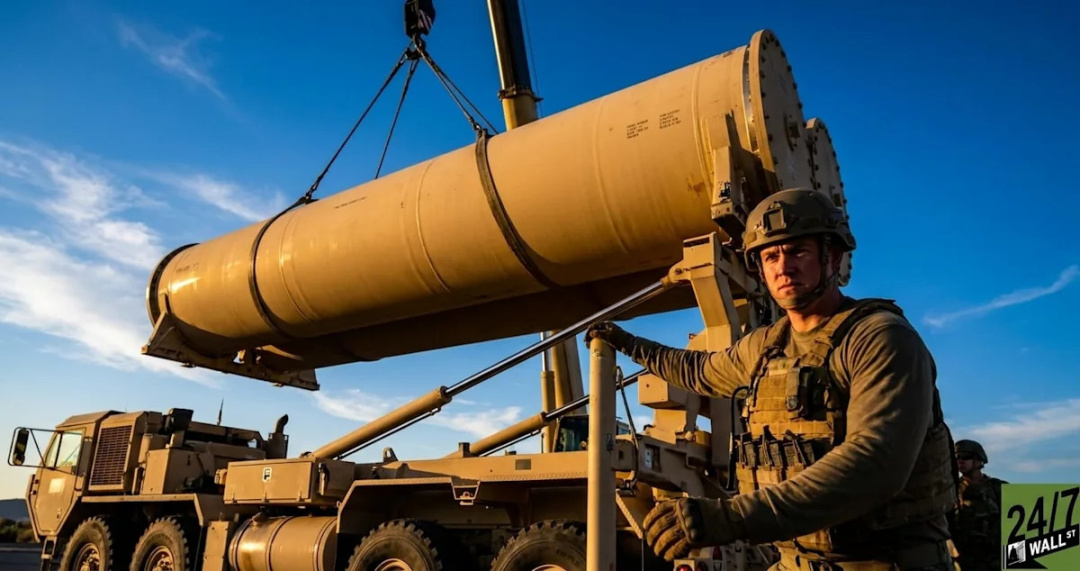
Lockheed Martin, identified in the Pentagon's budget as the prime contractor for THAAD systems, is set to receive funding for 27 units at a cost of $907.2 million, alongside a much larger mandatory procurement of 830 units. The Missile Defense Agency's recent $35 billion contract to increase THAAD production underscores the urgent need for these interceptors. Lockheed’s Q2 revenue rose by 10.5%, with a backlog reaching $230.42 billion, highlighting the demand for their systems.
RTX, formerly Raytheon Technologies, is leading the charge in air-defense interceptors, having booked over $5 billion in orders for GEM-T Patriot Effectors. With a Q2 revenue increase of 14.5% and a substantial backlog, RTX is well-positioned to meet the growing demands of the military. However, the CEO has pointed out that future production will heavily depend on supply chain stability.
The Common Sense Test
L3Harris Technologies, which recently acquired Aerojet Rocketdyne, is pivotal in the production of solid rocket motors for the THAAD and PAC-3 systems. Their framework agreement worth approximately $12 billion positions them as a crucial supplier in the defense supply chain. Despite a 14% increase in Missile Solutions revenue in Q2, the company faces challenges in meeting the escalating demands of the military.
As the U.S. military grapples with these shortages, two key factors could influence the situation. The anticipated PAC-3 multi-year contract in the latter half of 2026 and congressional action on the administration's $67 billion supplemental request for weapons replenishment are critical to addressing these gaps. The time it takes to convert these contracts into tangible revenue underscores the urgency of the situation and the need for immediate action to bolster U.S. military capabilities.