Conservative Caucus Aims to Strengthen State Legislatures
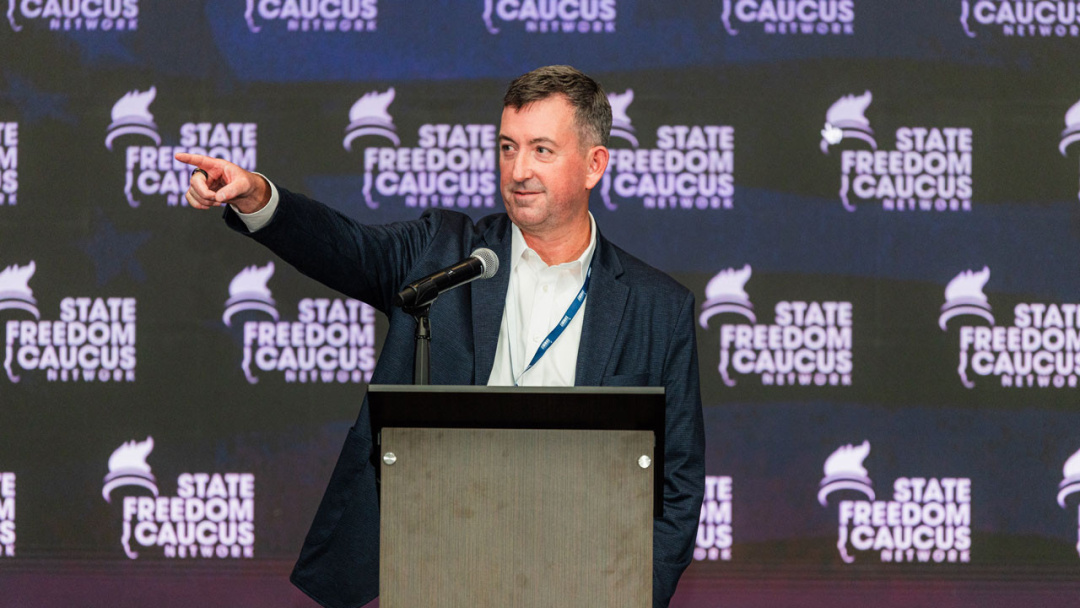
The State Freedom Caucus Network has been established to promote conservative legislation in state capitals throughout the United States. Contrary to what one might expect, the group's most significant hurdle isn't the Democrats; it's the so-called Republicans who abandon conservative principles after taking office.
Led by President Andrew Roth, the State Freedom Caucus Network consists of conservative lawmakers dedicated to reducing government spending, securing American elections, and steering state legislatures further to the right. The group, which originated from Congress' House Freedom Caucus, is involved in a wide range of issues, from the upcoming 2030 census to opposing government subsidies for data centers and the use of Flock cameras.
Common Sense Shop
The United States of Common Sense
Amazon shopping links. Sponsor Complete!
Roth emphasizes that the primary challenge lies in combating Republicans who masquerade as conservatives in red states. "Democrats in red states who want to run for office know they can’t get elected with a ‘D’ after their name, so they put an ‘R’ after their name, get elected, and then vote like Democrats," he stated. This issue is pervasive, affecting all 50 states, particularly those with Republican majorities.
The network's mission is to establish state freedom caucuses in various state capitals and succeed at the state level. Currently, the organization boasts 180 members across 15 states, many of whom are eyeing higher office positions. This year marks a pivotal moment as two alumni from the State Freedom Caucus Network, Chuck Gray, Wyoming's Secretary of State, and Blake Miguez, a Louisiana State Senator, are both running for Congress.
In Arizona, the network sees a promising opportunity with U.S. Rep. Andy Biggs, R-Ariz., potentially running for governor, supported by a robust freedom caucus in the state legislature. Roth envisions a collaborative effort to implement conservative reforms throughout the state.
Advocating for Fiscal Responsibility in States
Roth asserts that conservative lawmakers must not only vote in line with their principles but also vocalize the issues occurring in their state capitals. "Each state is different, and each state freedom caucus has its own list of priorities. But the one thing that is constant among all of them is the budget," he noted. Unlike Congress, states have the capacity to cut spending if they possess the political will, and the freedom caucuses are leading this charge.
For instance, thanks to the Missouri Freedom Caucus, the state legislature managed to cut its budget by nearly $4 billion, marking a significant achievement. Roth pointed out that Wyoming's and South Dakota's budgets have remained flat for two consecutive years, a feat that highlights the potential for fiscal discipline at the state level.
As the caucus tackles redistricting, they have actively sought to influence Missouri's redistricting process while opposing efforts in Maryland. Roth also criticized the use of Flock cameras, stating, "Our members hate them," and mentioned that the West Virginia Freedom Caucus is advocating for a Fourth Amendment Restoration Act to limit their use.
The Common Sense Test
Looking ahead, Roth anticipates significant battles regarding state incentives for data centers, which he describes as corporate welfare for tech companies that do not require taxpayer funds. He also stressed the critical importance of the upcoming 2030 census, indicating that the network is working to appoint a census director who will ensure the inclusion of a citizenship question. Roth believes that accurate census data could dramatically shift congressional representation in favor of the Republican Party.
As the State Freedom Caucus Network continues to expand, Roth expressed a desire to reach states like Indiana, Arkansas, North Dakota, and Tennessee, and even to make inroads into traditionally blue states like Maine. With the left's influence permeating various government levels, the network aims to counteract this trend by strengthening conservative representation in state legislatures.