Supreme Court Rules on 22nd Constitutional Amendment Bill Passage
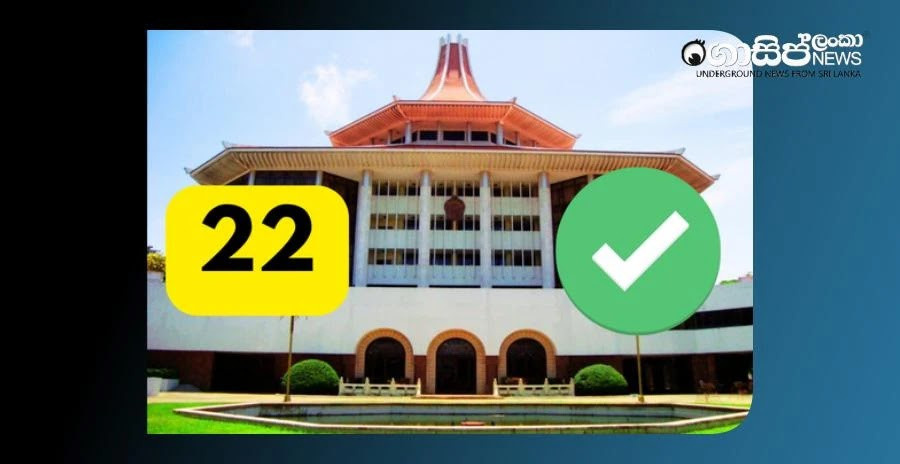
The Supreme Court of Sri Lanka has ruled that the 22nd Constitutional Amendment Bill can be passed without the need for a public referendum. This decision was announced by Speaker Dr. Jagath Wickramaratne during parliamentary proceedings on the 22nd. He stated that the bill requires only a special two-thirds majority vote in Parliament to be enacted.
This interpretation from the Supreme Court clarifies that, according to Article 83 of the Constitution, certain amendments can indeed be passed without a public vote. The court confirmed that the 22nd Constitutional Amendment is in line with constitutional provisions, which is a significant endorsement of the legislative process.
Common Sense Shop
The United States of Common Sense
Amazon shopping links. Sponsor Complete!
The proposed amendment includes key changes such as extending the retirement age for Supreme Court judges from 65 to 67 years and for Court of Appeal judges from 63 to 65 years. This adjustment reflects an effort to retain experienced judges within the judiciary for a longer period, potentially enhancing the quality of judicial oversight.
The panel of judges also provided guidance on how specific wording in some clauses should be amended, ensuring clarity and legal soundness in the bill's language. Furthermore, the Supreme Court's ruling includes observations regarding conditions that will apply to the Chief Justice when the amendment takes effect.
Supreme Court's Broader Judicial Reforms
In addition to the 22nd Amendment, the Supreme Court has ruled that the Judicial Organizations (Amendment) Bill, which was presented concurrently, is also constitutional and can be passed by a simple majority vote in Parliament. This dual endorsement indicates a streamlined path for significant judicial reforms in the country.
The Common Sense Test
The Speaker has taken steps to ensure that the Supreme Court's full decision is included in the official Hansard report of Parliament, emphasizing transparency and accountability in the legislative process. This ruling not only impacts the immediate legislative agenda but also sets a precedent for how constitutional amendments can be approached in the future.
As the Parliament prepares to move forward with these amendments, the implications for the judiciary and the balance of power within the government will be closely scrutinized. The decision to bypass a referendum raises questions about public engagement in constitutional matters, highlighting the tension between legislative expediency and democratic participation. Ultimately, the effectiveness of these amendments will depend on their implementation and the broader context of judicial independence in Sri Lanka.