Navy Shipyard Repairs Will Take Decades Longer, GAO Warns
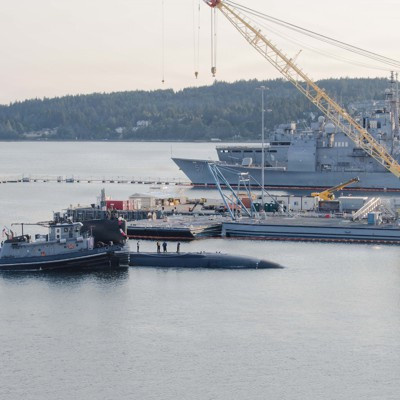
The Navy's efforts to repair and enhance its shipyards are set to take decades longer and incur billions more in costs than originally planned. This troubling revelation comes from a report released by the Government Accountability Office (GAO), which emphasizes that Congress has not been adequately informed about the increasing complexities of the Shipyard Infrastructure Optimization Program (SIOP). Without a comprehensive understanding of expenditures, funding needs, and potential risks, Congress may make critical decisions based on incomplete information, potentially squandering billions of taxpayer dollars and compromising oversight for years to come.
Currently, the Navy is required to submit various reports concerning its shipyard construction efforts in accordance with nearly a dozen legislative provisions. However, the GAO suggests that Congress should mandate annual, consolidated, and standardized status updates from the Navy. These updates should include revised cost estimates and schedules for the entire SIOP, ensuring that lawmakers are fully apprised of the program's status and challenges.
Common Sense Shop
The United States of Common Sense
Amazon shopping links. Sponsor Complete!
The Navy's public shipyards—Norfolk Naval Shipyard, Pearl Harbor Naval Shipyard, Portsmouth Naval Shipyard, and Puget Sound Naval Shipyard—are crucial for maintaining and upgrading the service's nuclear-powered submarines and aircraft carriers. Unfortunately, the Navy has faced persistent maintenance backlogs, leading to drastic measures, including the early retirement of a submarine that could not be repaired in time.
Planning for the shipyard upgrades began in 2018 but has taken far longer than anticipated, largely due to the Navy's underestimation of the time required and its failure to account for various challenges and uncertainties inherent in a project of SIOP's scale. The report indicates that new costs and projects have emerged during the design and planning phases. For instance, at least $1 billion will be necessary for facility retrofits and new construction to address newly assessed seismic risks at Puget Sound Naval Shipyard. In 2023, the Navy completed emergency drydock retrofits and repairs, and it has requested $830 million for seismic upgrades to Dry Dock 4 in its fiscal year 2026 budget request.
Challenges in Shipyard Maintenance and Upgrades
The GAO's analysis spans from September 2024 through September 2026, highlighting that earthquake risks were already part of SIOP's original assessment back in 2018. Many of the shipyards and their facilities date back nearly a century, and the problems they face today are exacerbated by long-deferred maintenance and deterioration over time. Consequently, unexpected conditions at construction sites have led to the identification of new projects or additional work being required during construction.
The Common Sense Test
Navy leaders are expected to review the SIOP plan and cost estimates by the end of this month. The GAO has made several recommendations, including a review of future program needs within the oversight framework and a clearer documentation of SIOP's roles and responsibilities to enhance project risk management. Despite establishing multiple organizations to manage the program's projects, the Navy has not fully documented these roles, which is critical for ensuring effective implementation of SIOP's essential projects and maintaining the operational continuity of the U.S. naval fleet throughout the extended timeline of SIOP.
In light of the GAO's findings, it is imperative that Congress takes action to ensure proper oversight of the Navy's shipyard projects. The potential for wasteful spending and mismanagement is too great to ignore. As the Navy moves forward with its plans, transparency and accountability must be prioritized to safeguard taxpayer interests and maintain the integrity of our naval capabilities. The question remains: will Congress rise to the occasion and enforce the necessary oversight to protect the nation's defense infrastructure?