U.S. Marine Arrest in Okinawa Sparks Outrage Over Military Presence
The recent arrest of a U.S. Marine in Okinawa has once again ignited tensions surrounding the U.S. military's presence in Japan. Lance Cpl. Devin Jacob Ballard, 20, was taken into custody on suspicion of killing 39-year-old Anna Yagi, who reportedly died from suffocation in a hotel. In addition to the murder charge, Ballard is also accused of stealing Yagi's wallet and other belongings. Local police have stated that Ballard has denied the allegations.
The case has been referred to the local prosecutor's office, but it remains uncertain whether Ballard will face prosecution. Under a long-standing agreement between the U.S. and Japan, U.S. military personnel are subject to Japanese jurisdiction for crimes committed off-duty. This incident has drawn immediate backlash from both Okinawan and national authorities, with the U.S. ambassador to Japan and the commander of U.S. Forces Japan summoned to Tokyo for discussions. Prime Minister Sanae Takaichi condemned the alleged crime as "extremely brutal and heinous" in a statement on social media.
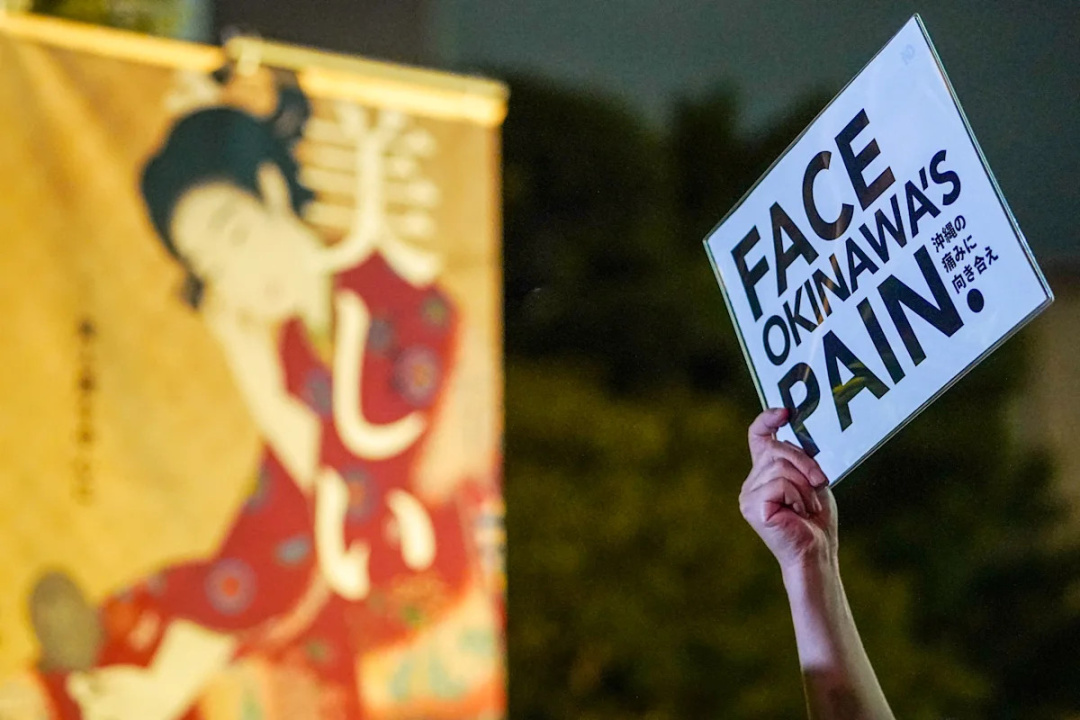
Protests have erupted in response to the incident, with around 180 people demonstrating outside the U.S. Embassy in Tokyo. Another protest is scheduled outside the Foreign Ministry, reflecting the deep-seated frustrations of local residents regarding the U.S. military's presence in Okinawa. In response to the incident, U.S. Forces Japan announced that all personnel stationed in Okinawa would suspend activities for 48 hours and undergo training on standards and discipline. Additionally, troops will observe a 30-day curfew as part of a "Period of Reflection."
This incident comes at a time when both the U.S. and Japan are grappling with a complex security environment, particularly in light of threats from China, North Korea, and Russia. The Japanese Foreign Ministry has characterized this period as the most severe since World War II. Takaichi, known for her hawkish stance on China, has previously suggested that Japan might engage in defending Taiwan should China attempt an invasion, emphasizing the strategic importance of Okinawa in this context.
Okinawa's Military Presence and Local Sentiment
Okinawa hosts about 70 percent of U.S. military facilities in Japan, despite comprising less than 1 percent of the nation's land area. This disproportionate burden has long fueled local resentment, particularly concerning crime, environmental pollution, and overcrowding associated with military bases. The political landscape in Okinawa has historically seen local governors opposing plans to strengthen the U.S. and Japanese military presence, often clashing with the central government's support for such initiatives.
However, the newly elected governor of Okinawa, Genta Koja, has taken a different approach. He has dropped his predecessor's opposition to the construction of a new U.S. Marine Corps base in Henoko and expressed a willingness to collaborate with Tokyo on military matters. This arrest complicates Koja's conciliatory stance, as he has pledged to prioritize protecting Okinawa while also planning to call for a reduction in U.S. military bases in discussions with Takaichi.
The Common Sense Test
Koja now faces a critical dilemma, according to Fumiaki Nozoe, a professor of international politics at Okinawa International University. He must navigate the conflict between national security policies and the concerns of Okinawa residents. Historically, crimes committed by U.S. forces have prompted the Pentagon to make concessions to local authorities. For instance, public outrage following the 1995 rape of a 12-year-old Okinawan girl by U.S. servicemen led to promises to close Marine Corps Air Station Futenma, although that base remains operational.
Despite the gravity of the current incident, experts suggest that it is unlikely to lead to significant concessions from the U.S. or Japanese governments, which appear focused on managing public relations rather than addressing underlying issues. Nozoe warns that without fundamental changes, further incidents could provoke renewed backlash from Okinawa's residents, highlighting the ongoing tension between military presence and local community concerns.