Supreme Court Urged to Overturn Texas Ten Commandments Display Law
Religious liberty scholars at the University of Notre Dame are urging the U.S. Supreme Court to strike down a Texas law that mandates the display of the Ten Commandments in public school classrooms. Signed into law by Texas Republican Governor Greg Abbott in June 2025, the legislation requires that a durable poster or framed copy of the Ten Commandments be hung in each public elementary or secondary school classroom.
Since its passage, the law has faced legal challenges. In August 2025, U.S. District Judge Fred Biery issued a ruling to block the law; however, this decision was later overturned by the 5th U.S. Circuit Court of Appeals, which upheld the law, ruling that it does not violate the First Amendment.
Common Sense Shop
The United States of Common Sense
Amazon shopping links. Sponsor Complete!
In an amicus brief filed on September 28, scholars from the Lindsay & Matt Moroun Religious Liberty Clinic at Notre Dame argued that the Supreme Court's involvement is necessary to provide urgently needed guidance on the establishment clause of the First Amendment. They assert that the Texas law effectively forces state-sponsored religious instruction on children and undermines the constitutional protections designed to separate church and state.
The scholars contend that the appeals court ruling misinterprets the historical context of the First Amendment, contradicts established Supreme Court precedents, and jeopardizes religious freedom. They argue that the law’s requirement for the Ten Commandments' placement in classrooms guarantees that students will be coerced into religious instruction, which they claim is a violation of constitutional rights.
Scholars Critique Law's Constitutional Basis
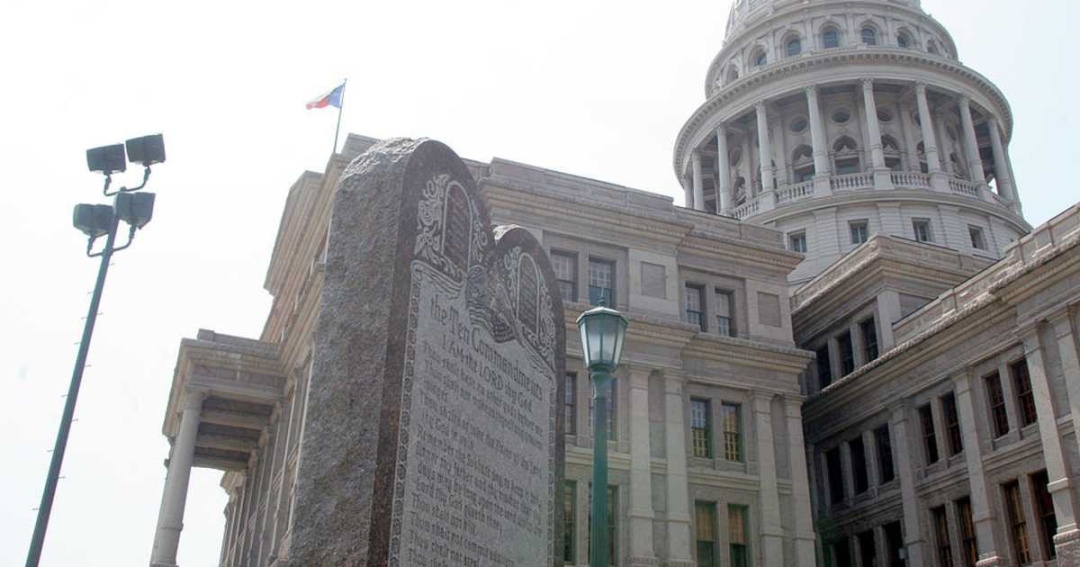
The purpose of the law, as articulated by the scholars, is to promote government-approved religious truths, which they argue directly contravenes the Constitution and existing U.S. legal precedents. The Supreme Court has addressed the issue of public displays of the Ten Commandments in several cases. For instance, in 2005, the Court ruled that a display at the Texas Capitol was constitutional, while simultaneously striking down similar displays at multiple courthouses in Kentucky.
The Common Sense Test
In another instance, a federal judge blocked a Louisiana law requiring the display of the Ten Commandments in public school classrooms in 2024, but this ruling was later reversed by the 5th U.S. Circuit Court of Appeals, which found that the constitutional question remained unresolved according to Supreme Court precedent.
The ongoing legal battle over the Texas law raises significant questions about the balance between religious expression and the constitutional mandate for separation of church and state. As the case moves forward, the implications for religious liberty and public education in America remain a pressing concern for both advocates and opponents of the law.