Supreme Court to Consider Warrantless Phone Searches at the Border
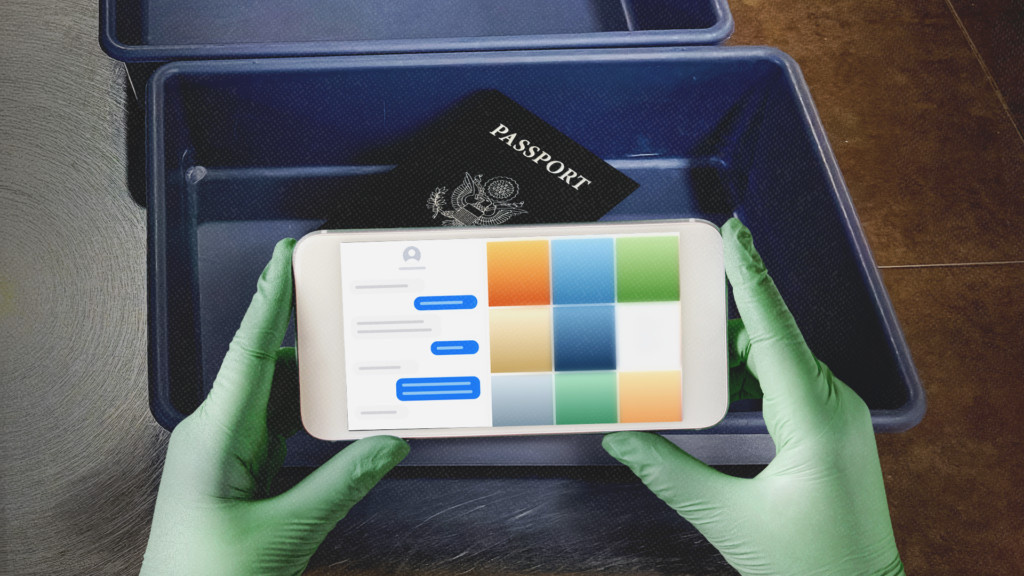
George Anibowei, a U.S. citizen and immigration attorney based in Texas, has faced warrantless phone searches by border agents at least five times upon returning to the United States. In one instance, agents copied the entire contents of his phone, which included confidential communications with clients. The government retains this data, leaving Anibowei unaware of who has accessed it. As a result, he now opts to leave his work phone at home when he travels, highlighting the invasive nature of these searches.
On September 29, the Supreme Court requested a response from the federal government regarding Anibowei's petition, which questions whether the Fourth Amendment permits border agents to search the contents of a phone without a warrant. The government waived its response, likely anticipating that the Court would dismiss the petition without further consideration. However, in 2021, the solicitor general informed the Court that this issue has led to an "entrenched circuit conflict" of significant practical importance, a conflict that has intensified in recent years. Currently, seven federal appeals courts maintain that a warrant is never required for phone searches at the border, while the 4th and 9th Circuits assert that a warrant is necessary in certain circumstances. This discrepancy means that a citizen's constitutional rights can vary significantly depending on the airport they enter.
Common Sense Shop
The United States of Common Sense
Amazon shopping links. Sponsor Complete!
The Supreme Court has previously indicated its stance on this matter. In the landmark case Riley v. California (2014), the Court unanimously ruled that police generally require a warrant to search a phone belonging to an arrested individual. This ruling established that while there are exceptions for searches incident to arrest, these do not extend to digital data, which cannot pose a threat to officers. The Court emphasized that treating a phone as just another container, akin to a pocket, fails to recognize the unique nature of digital data. The border-search exception, which is meant to enforce customs regulations and prevent contraband, does not apply to digital data in the same way it does to physical goods.
Defenders of warrantless searches often cite historical precedent, referencing United States v. Ramsey (1977), where the Court allowed warrantless customs searches. However, this ruling was specific to physical goods and did not extend to reading a traveler's papers without a warrant. The founding generation was particularly protective of correspondence, as evidenced by the strict regulations against opening mail without explicit warrants. The distinction between searching physical goods and accessing personal correspondence is crucial and has been overlooked by some courts.
Recent Court Rulings on Search Policies
Recently, the 2nd Circuit joined the ranks of courts that have dismissed these traditional protections. In United States v. Alisigwe, Judge Steven Menashi ruled that agents need not have any suspicion to search a traveler's property at the border, including phones. This ruling raises concerns about the potential for arbitrary and discriminatory searches, as Judge Eunice Lee noted in her concurrence.
As the legal landscape evolves, Anibowei's case stands out due to its straightforward nature. He is a naturalized citizen with no allegations against him, challenging the government's search policies directly rather than seeking to suppress evidence in a criminal case. The 5th Circuit has acknowledged that his case focuses solely on the warrant question, making it a prime candidate for Supreme Court review.
The Common Sense Test
The implications of this case are significant. In fiscal year 2025, Customs and Border Protection (CBP) conducted 55,318 searches of electronic devices, nearly eleven times the number from 2012, with a quarter of those searches targeting U.S. citizens. Under current directives, agents can retain and share any data they find with various agencies. This practice has led to a chilling effect, prompting legal professionals and civil rights organizations to advise individuals to leave their devices at home when traveling.
The Founders fought against customs agents who wielded unchecked search powers. Allowing border agents to access a citizen's private correspondence, photos, and client files without a warrant or any suspicion revives those abuses. The Supreme Court should take up Anibowei's case to affirm that digital communications retain the same Fourth Amendment protections as physical correspondence.