Pentagon Must Enhance Supply Chain Transparency to Compete with China
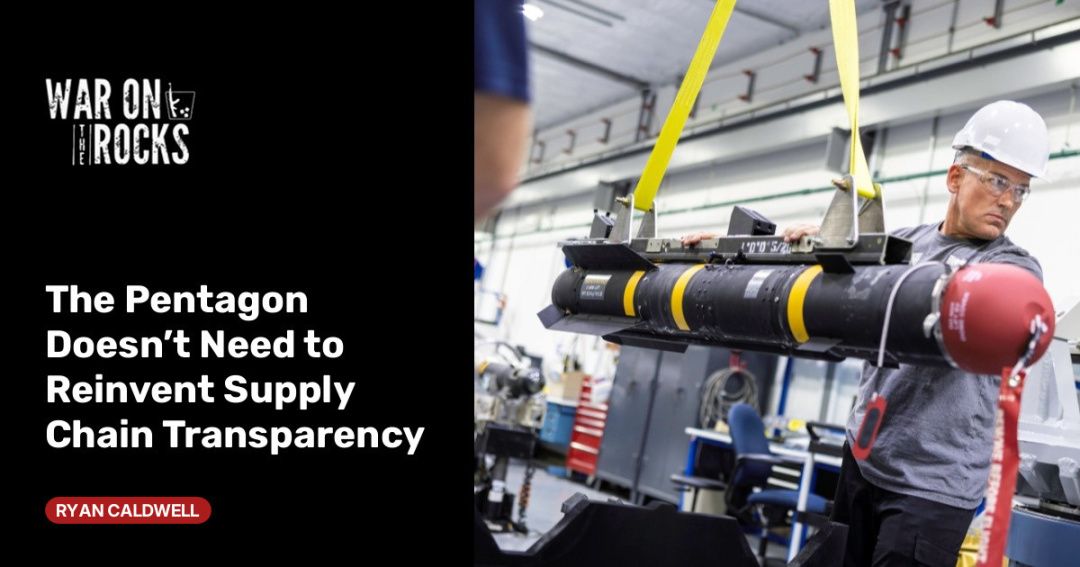
As the United States strives to rebuild its defense industrial base, the Pentagon is confronted with the daunting task of navigating an industrial ecosystem that it no longer fully controls or comprehends. China has gained a strategic advantage over the U.S. by employing targeted export controls and licensing requirements at key supply chain nodes. In contrast, U.S. responses have often been broader and less effective, akin to using blunt instruments rather than precision tools in a complex geopolitical landscape.
To maintain robust weapons stockpiles and operational readiness, the Pentagon must enhance its understanding of where critical materials originate and how they can be effectively scaled. The Department of Defense (DoD), with the largest acquisition budget and a congressional mandate to investigate its supply chains, is the primary driver of supply chain tracking within the government.
Common Sense Shop
The United States of Common Sense
Amazon shopping links. Sponsor Complete!
While it has been suggested that "nobody wants a responsibly mined missile," the Pentagon could benefit from leveraging the expertise of existing organizations. Groups like the Responsible Business Alliance and the Initiative for Responsible Mining Assurance have developed effective methods for achieving transparency and resilience in complex supply chains. Even though their objectives may not align perfectly with U.S. national security goals, their frameworks can inform a more effective supply chain tracking system.
China's internal incentives for supplying critical minerals to the U.S. have evolved as the country has industrialized. Historically, Chinese policymakers focused on selling minerals to the West to build market share. However, their industrial policy has shifted to capture more value-added manufacturing, prioritizing the maintenance and growth of downstream capabilities. In contrast, the U.S. has been slow to adapt its domestic incentives and policies, often prioritizing low-cost and responsive supply chains over resilience.
In recent years, the U.S. government has intensified efforts to identify key national security supply chains, with rare earths being a prominent focus. Congressional initiatives have led to a complex web of reports and requirements aimed at improving national security, but these efforts require significant time and resources to implement effectively. Previous legislation, such as the Berry Amendment, mandated supply chain tracing, while recent provisions in the National Defense Authorization Act have introduced new requirements for contractors.
Challenges in Supply Chain Implementation
Despite clear congressional authority, the implementation of these supply chain initiatives faces challenges. Questions remain regarding data rights, compliance from non-defense and foreign suppliers, and the definition of a commercially reasonable effort. The House has directed the Pentagon to report on its progress in reviewing various supply chain categories, highlighting the need for proactive engagement with contractors to drive compliance and behavior change.
Building a workable regulatory regime for supply chain security is inherently complex, especially in a monopsony environment. The most effective approach may involve building upon the efforts of organizations outside the U.S. government that have generated valuable insights over the past two decades. While some criticisms of humanitarian supply chain tracking efforts suggest they are naive, others argue that their focused approach has fostered broader acceptance and integration.
Any new national security supply chain initiative must account for the limitations and pushbacks that will inevitably arise, particularly from U.S.-based defense contractors and foreign miners. The U.S. must create a supply chain tracking system that is accessible and accommodating to various stakeholders, avoiding overly restrictive requirements that could alienate potential participants.
The Common Sense Test
To achieve this, the Pentagon should consider utilizing outside auditors to handle sensitive data, ensuring minimum transparency requirements while alleviating burdens on government and prime contractors. The resulting system must be straightforward enough for widespread use, focusing on accurately identifying companies involved in critical materials and ensuring compliance with local and international standards.
The U.S. possesses sufficient economic power to avoid the pitfalls of rigid supply chain models that could lead to increased costs and fragility. By collaborating with experienced supply chain experts from non-defense sectors, the Pentagon can develop a flexible, competitive, and cost-effective framework that enhances supply chain transparency without sacrificing national security goals. Ultimately, the success of these initiatives will depend on the Pentagon's willingness to adapt and learn from the expertise available beyond its traditional boundaries.