Fifth Circuit Ruling on Immigration Bond Hearings Ahead of Supreme Court Review
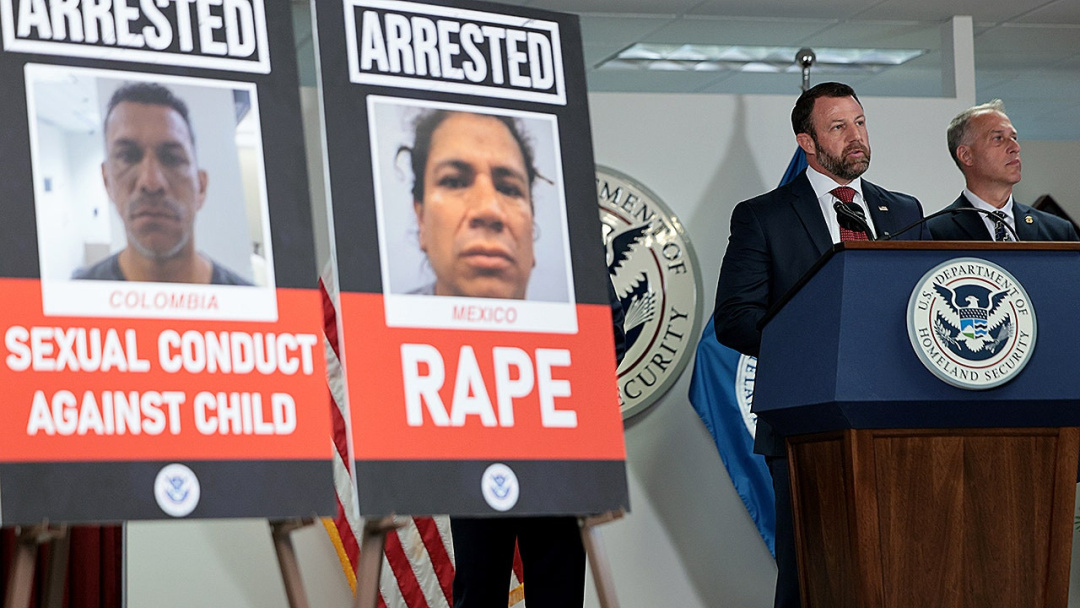
In a significant ruling, the Fifth Circuit Court of Appeals determined that illegal immigrants who have never been formally admitted to the United States do not have a constitutional right to bond hearings while awaiting deportation. This decision, announced just days before the Supreme Court is set to hear oral arguments on related immigration cases, could have far-reaching implications for the Trump administration's immigration policies.
The ruling emerged from the case of Ignacio Sosnava Rodriguez v. Sylvester M. Ortega, where the court found that three immigrant men detained under the mandatory-detention statute are not entitled to bond hearings under the Due Process Clause of the Fifth Amendment. The court emphasized that their years of residency and community ties do not grant them a constitutional right to such hearings, stating, "The Constitution does not entitle them to a bond hearing."
Common Sense Shop
The United States of Common Sense
Amazon shopping links. Sponsor Complete!
As the Supreme Court prepares to hear the case Rhoney v. Barbosa da Cunha, which questions the applicability of the federal mandatory-detention statute to longtime immigrants arrested within the U.S., the Fifth Circuit's ruling could either bolster or undermine the government's position. The Rhoney case will address whether immigrants who entered illegally and have lived in the U.S. for years can be subjected to mandatory detention without the opportunity for bond hearings.
Currently, there exists a split among the circuit courts regarding this issue. The Fifth and Eighth Circuits maintain that these immigrants remain "applicants for admission" under Section 1225 of the Immigration and Nationality Act, allowing for mandatory detention. In contrast, nine other circuits have ruled that Section 1226 applies, which would enable these immigrants to seek bond hearings.
The Supreme Court's decision will ultimately clarify whether longstanding residents can be treated under the same mandatory-detention provisions that apply to those seeking admission. If the Court sides with the Second Circuit in the Rhoney case, it could provide a path for Barbosa da Cunha, a Brazilian national detained after living in the U.S. illegally for nearly two decades, to seek release on bond. Such a ruling would significantly diminish the impact of the Fifth Circuit's decision, as it would negate the need to address the constitutional question of bond hearings.
Dissenting Opinions and Legal Implications
Judge Leslie Southwick, in her dissent, pointed to the ongoing Supreme Court battle, suggesting that if the higher court finds the Fifth Circuit's interpretation incorrect, the constitutional implications of their ruling would be less significant. However, conservative legal experts argue that the Fifth Circuit's ruling may strengthen the government's hand in Rhoney by alleviating some constitutional concerns against the mandatory-detention interpretation.
Michael Morley, a constitutional law professor, noted that the Fifth Circuit's ruling could influence the Supreme Court's approach, as courts often consider whether a particular interpretation of federal law raises constitutional issues. If the Supreme Court agrees with the Fifth Circuit's analysis, it may be more inclined to conclude that federal law permits such detention.
The Common Sense Test
Hans von Spakovsky, a senior legal fellow, echoed this sentiment, asserting that the ruling supports the government's stance as the justices prepare to resolve the existing circuit split. He expressed confidence that the Supreme Court would likely align with the Fifth Circuit's interpretation, which asserts that bond hearings are not required for immigrants who were never admitted to the U.S.
As the Supreme Court has yet to schedule oral arguments in the Rhoney case, the legal community remains attentive to how these rulings will shape the future of immigration policy and constitutional rights in America.