State Department's Christian Heritage Video Faces Democratic Backlash
The State Department has released a new video in honor of International Religious Freedom Day, celebrating America's identity as a Christian nation. The video features images of historical figures such as Christopher Columbus and the Pilgrims, accompanied by Secretary of State Marco Rubio’s declaration that America was shaped by Christian ideals. He states, "Our faith calls us outward into the limitless darkness of the unknown. It tells us to go forth and preach the gospel to the world as a witness unto all nations and to the end of the earth. From that command came America."
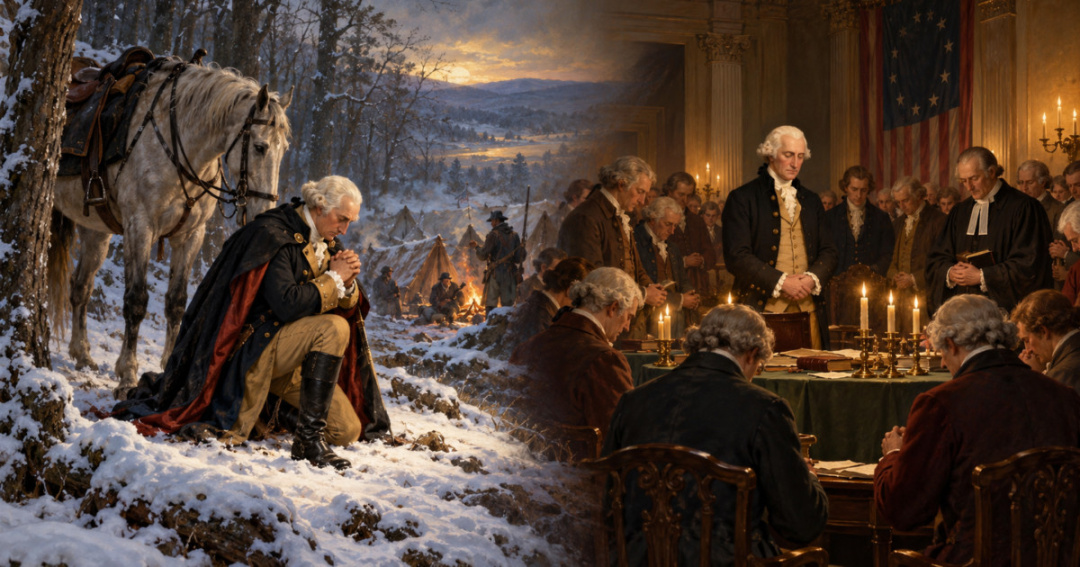
Democratic leaders have responded with criticism, claiming that the video infringes upon the separation of church and state and accusing the Trump administration of promoting Christian nationalism through an official government channel. Rubio’s narration is paired with historical artwork, including depictions of George Washington kneeling in prayer at Valley Forge and presiding over the Constitutional Convention. The video concludes with Rubio asserting that the nation’s soul has always been rooted in an ancient faith.
Common Sense Shop
The United States of Common Sense
Amazon shopping links. Sponsor Complete!
This video draws from a longer address Rubio delivered for the Rededicate 250: A National Jubilee of Prayer, Praise, and Thanksgiving, an event announced by Trump during the National Prayer Breakfast in February 2026. Rubio’s address outlines Christianity’s influence on American history, referencing significant moments such as the Continental Congress’s day of fasting and prayer on May 17, 1776, and the Apollo 8 astronauts reading from Genesis on Christmas Eve in 1968.
California state Senator Scott Wiener, a Democratic candidate for Nancy Pelosi’s congressional seat, criticized the video on social media, stating, "This is an official United States government account promoting the Christian gospel." Oklahoma state Representative Mickey Dollens, a Democrat, has also challenged the historical accuracy of the video’s content, specifically questioning the portrayal of Washington’s prayer at Valley Forge and the image of Washington at the Constitutional Convention.
While the Museum of the American Revolution acknowledges the story of Washington’s prayer as stemming from an evangelical preacher’s biography, it notes that the evidence is not definitive. However, Washington’s religious practices and calls for public prayer are well-documented in history.
Debate Over Religious Freedom and Identity
The controversy surrounding the video raises important questions about whether a government-produced video celebrating Christianity’s influence on American history violates the religious freedoms of those who adhere to other faiths or none at all. Importantly, the video does not mandate that Americans practice Christianity or attend church, nor does it prevent individuals of other faiths from practicing their beliefs.
The First Amendment provides two key protections concerning religion: the Free Exercise Clause, which safeguards religious practice, and the Establishment Clause, which restricts the government from establishing or endorsing a religion. Critics of Rubio’s video are raising concerns under the Establishment Clause, arguing that it conflates Christianity with American identity.
The Common Sense Test
However, the Supreme Court has established that government references to religion do not inherently constitute an unconstitutional establishment of religion. In cases like American Legion (2019) and Kennedy v. Bremerton (2022), the Court has emphasized the historical context of religious expressions in public life and has protected religious freedoms from government interference.
The ongoing debate over the video underscores a broader conflict regarding America’s religious identity. While Democrats and secular advocacy groups argue that such government recognition of Christianity risks endorsing a specific faith, the historical examples cited by Rubio are part of America’s documented past. The central issue remains whether the federal government can celebrate this heritage without crossing the constitutional line between acknowledgment and establishment of religion.